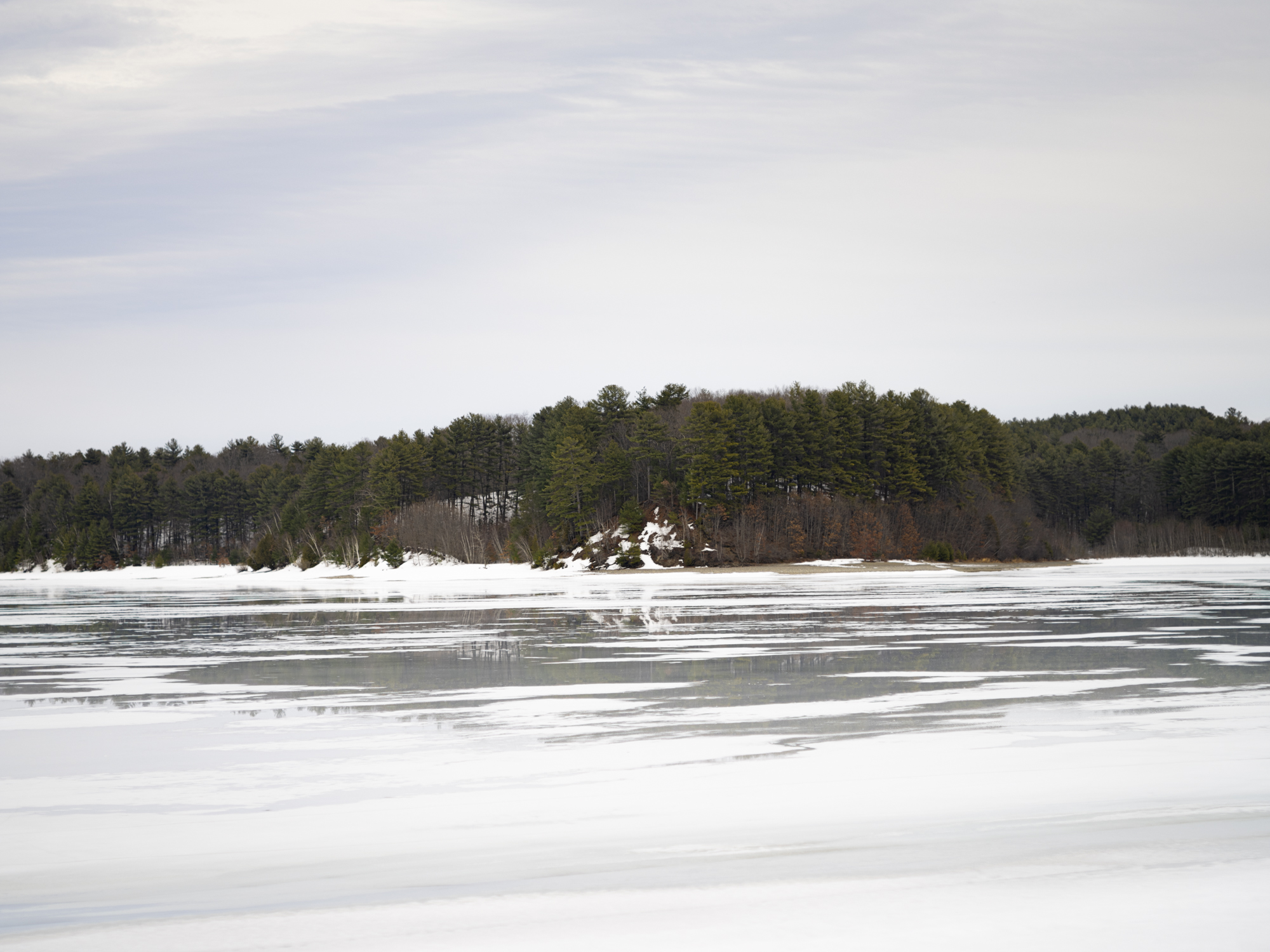
Shot with the SMC Pentax 67 105mm f/2.4 on the Fujifilm GFX 100s — Wachusett Reservoir, Boylston, MA
The Pentax 67 105mm f/2.4 has a reputation that precedes it. Mention it in any serious medium format photography circle and the conversation almost always gravitates toward its legendary rendering of faces — the buttery compression, the three-dimensional subject separation, the glow of specular highlights dissolving into smooth, creamy out-of-focus transitions. It is, by most accounts, one of the finest portrait lenses ever made for any format.
But reduce it to a portrait lens and you’re only telling half the story.
The Lens Itself
The SMC Pentax 67 105mm f/2.4 was designed for the Pentax 6×7 system — a camera that shot 6×7cm negatives and required glass engineered to cover a generous image circle. That oversized coverage is exactly what makes lenses from the Pentax 67 system so compelling on modern digital medium format bodies like the Fujifilm GFX 100s.
The 105mm is built like the era it came from: all metal, dense, with a smooth damped focus helicoid and an aperture ring that clicks with satisfying precision. It features Pentax’s SMC (Super Multi Coating) treatment — a multi-layer anti-reflective coating that manages flare and contrast exceptionally well for glass of its age. Wide open at f/2.4, it renders with a distinct character: slightly warm, luminous, with a soft rolloff at the edges that feels organic rather than aberrated. Stop down to f/5.6 or f/8 and it sharpens across the entire frame with pleasing evenness.
On the GFX 100s via a simple Pentax 67-to-GFX adapter, the lens covers the 44×33mm sensor with room to spare — no vignetting, no crop, full use of the 102-megapixel sensor. In full-frame equivalent terms, 105mm on the GFX translates to approximately 83mm — a moderate telephoto with gentle compression characteristics ideal for a wide range of subjects, landscapes among them.
Wachusett Reservoir in Late Winter
The image above was made at Wachusett Reservoir in Boylston, Massachusetts — a 4.1 billion gallon drinking water reservoir that serves greater Boston and one of the more striking natural landscapes in central Massachusetts. In late winter, when the ice begins to fracture and recede but hasn’t fully surrendered to the season, the reservoir takes on a quality that’s almost painterly: pale, reflective ice in the foreground; a dark tree line of Eastern white pine and bare hardwoods across the far shore; a high-pressure sky striated with thin cirrus cloud.
It’s a scene that rewards patience and a careful eye. There’s very little drama in the conventional sense — no golden hour fire, no crashing waves. The interest lies in the tonal subtleties: the slight warmth of the remaining ice against the cool gray of open water, the reflected tree line shimmering just below the surface, the quiet layering of horizontal planes from foreground to sky.
This is exactly the kind of scene where a 105mm focal length on medium format begins to justify itself as a landscape tool.
Why 105mm Works for Landscapes
The reflexive move for landscape photography is wide — 28mm, 24mm, sometimes wider. There’s a logic to it: wide angles emphasize foreground, create drama through exaggerated perspective, and pull in a broad field of view. But wide-angle landscape photography can also feel restless, overworked, and compositionally frantic when the scene doesn’t cooperate.
There’s a quieter tradition in landscape photography that favors the moderate telephoto. Ansel Adams frequently worked with longer focal lengths on his large format cameras. Edward Weston’s 8×10 contact prints often show the compression and selective framing that longer glass provides. The telephoto doesn’t try to include everything — it isolates, compresses, and strips the scene down to essentials.
At 105mm on the GFX 100s, the Pentax glass does exactly this at Wachusett. The foreground ice and the far tree line are brought into the same spatial plane in a way that a wide lens would never achieve. The reflections in the open water become a structural element, not a small detail in the lower third of a wide composition. The sky — muted, layered, atmospheric — occupies just the right proportion of the frame without dominating it.
The mild telephoto compression flattens the distance between the snow-covered shore and the pine tree line in a way that feels true to how the eye experiences the reservoir on a still day — as a series of quiet horizontal layers rather than a receding cone of space. That flatness is not a limitation. It’s the image.
The Rendering Character on Digital Medium Format
One of the most compelling reasons to shoot adapted Pentax 67 glass on the GFX 100s is the interaction between vintage optics and a modern high-resolution sensor. The GFX 100s is an extremely revealing camera — 102 megapixels across a 44×33mm sensor means that lens characteristics, both strengths and weaknesses, are rendered with unflinching transparency.
The 105mm f/2.4 holds up remarkably well under this scrutiny. At landscape apertures — f/8 to f/11 — the center and mid-frame resolution is excellent, extracting genuine detail from the fine texture of the ice surface and the individual branches of the pine trees across the water. The SMC coating keeps contrast clean even in the diffuse lighting conditions typical of overcast New England winters.
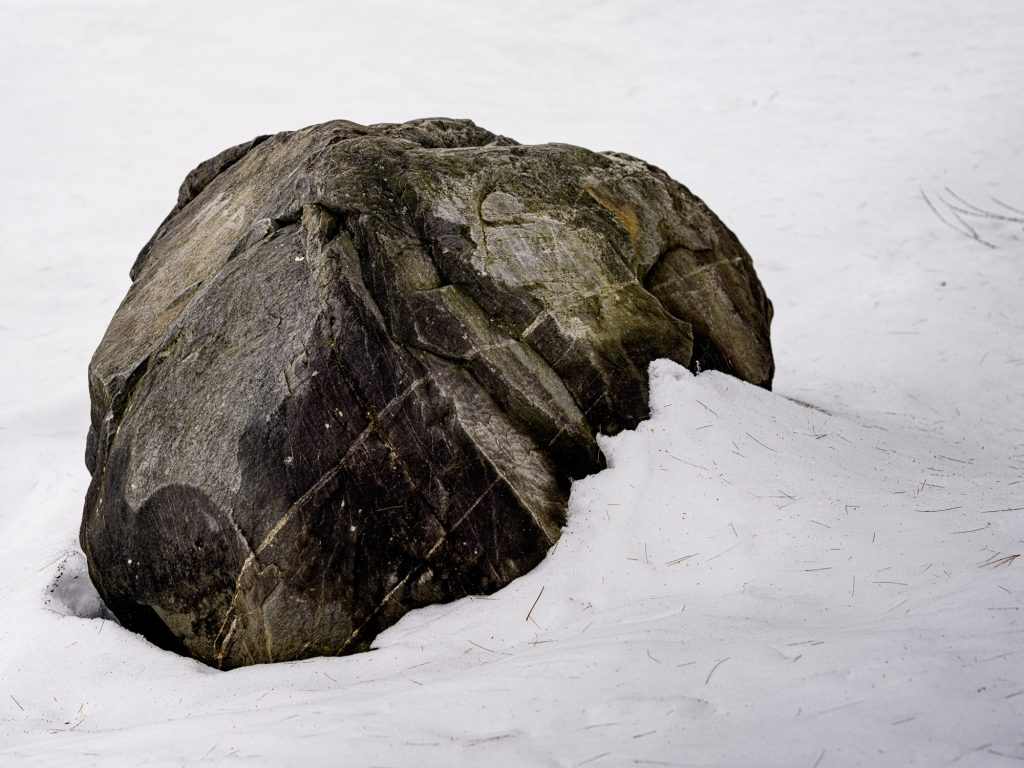
The tonal rendering is worth noting specifically. Where modern lenses can render a scene like this with clinical accuracy — technically correct but slightly cold — the Pentax 67 glass introduces a very subtle warmth and a slightly lower contrast signature in the midtones that suits winter landscape work exceptionally well. It isn’t nostalgia for its own sake; it’s a characteristic that aligns with the emotional register of the scene.
Practical Considerations
Adapting Pentax 67 glass to the GFX system is straightforward. Fotodiox and other manufacturers produce reliable adapters, and the lens communicates nothing electronically — aperture is set on the ring, focus is manual. On a 102-megapixel sensor, focus peaking and magnified live view are essential tools, and the GFX 100s provides both in a form that makes manual focus genuinely practical in the field.
At apertures used for landscape work, the depth of field at this focal length is substantial. For the lake image above, focused at the distant tree line, the depth of field extends well across the reflective ice foreground at f/8 — no focus stacking required.
The combination of the GFX 100s body and the Pentax 67 105mm is not light. This is glass that was designed for a heavy mechanical SLR, and it shows. But for deliberate, tripod-based landscape work, the weight becomes irrelevant against the quality of what the combination can produce.
A Lens Worth Reconsidering
If you shoot Fujifilm GFX and have access to a Pentax 67 105mm f/2.4 — whether through ownership or a rental — take it somewhere that isn’t a portrait studio. Take it to a reservoir in February, to a fog-covered hillside, to the edge of a lake at dusk. Work with the focal length rather than against it. Let the compression do what it does.
You may find, as many have, that one of the great portrait lenses of the medium format era has been quietly waiting to show you what it can do with a horizon line.
Purchasing gear from the above link helps me keep the site going!