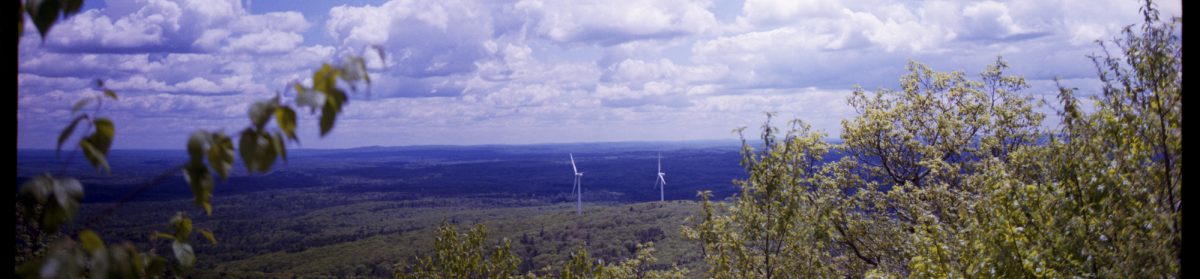
I’m always interested when a new color film hits the market. It doesn’t happen often anymore, and when it does, it’s usually a rebrand or a repackage of something we’ve seen before. So when I heard about OptiColour 200 from Optik Oldschool — a genuinely new color negative emulsion in 120 format — I had to try it. What I got was a film with real promise, a story worth telling, and an unexpected mechanical problem on the Pentax 67.
The Film Itself
OptiColour 200 is a 200-speed daylight-balanced C-41 color negative film. It’s manufactured by InovisCoat in Germany using what’s known as the Wolfen NC200 emulsion. The 120 version is exclusive to Optik Oldschool — you can’t get it from ORWO or anyone else in medium format.
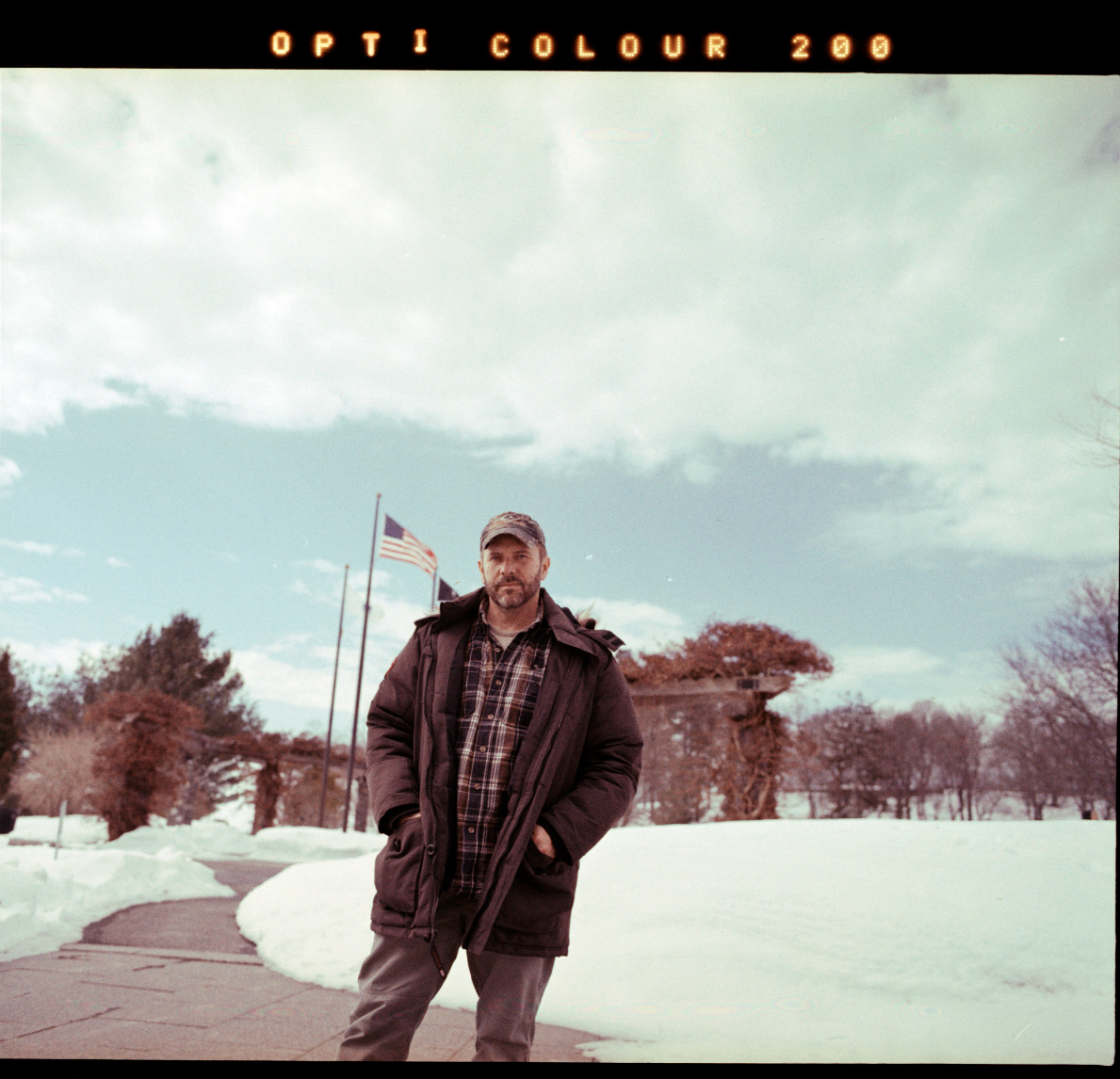
I developed it at home using my standard C-41 process and scanned on the Epson V850. The color palette is distinctly different from anything in the Kodak or Fuji lineup. Where Portra leans warm and soft, and Ektar goes hyper-saturated and punchy, OptiColour 200 sits in a more neutral, almost European space. The greens are rich without being oversaturated. Reds have good presence. Skin tones are natural — not the warm glow of Portra, but a more honest, less romanticized rendering.
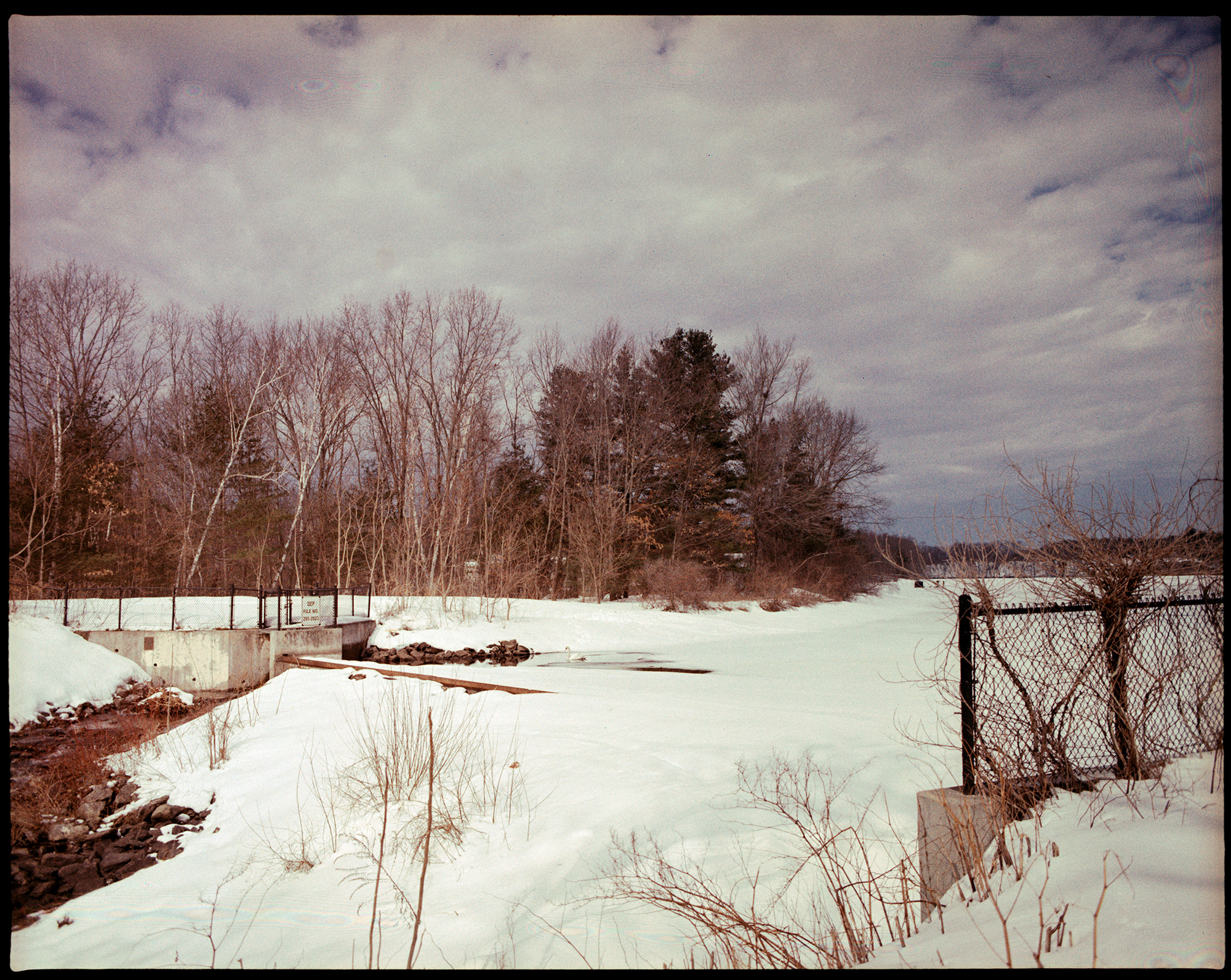
Grain at box speed is well-controlled for a 200-speed film. It’s not as invisible as Ektar at 100, but in 6×7 on the Pentax, grain is essentially a non-issue for any reasonable print size. Sharpness is respectable. Contrast is moderate — enough to give images structure without crushing shadows or blowing highlights. The overall look is clean and classic, like what you might imagine a modern European color film should look like if someone built one from scratch today. Which, as it turns out, is essentially what happened.
The orange base is a welcome detail for anyone doing their own scanning. If you’ve dealt with the greenish base on some of the other ORWO color stocks, you know how much extra work that adds to your scanning workflow. Optik Oldschool specifically pushed InovisCoat to switch to an orange base, and it shows — my V850 handled the negatives with minimal fuss in Negative Lab Pro.
The History — From AGFA to ORWO to Your Camera
The story behind this film is one of the more interesting chapters in modern film photography, and it stretches back over a century.
It starts with AGFA in Wolfen, Germany, where film production began in the early 1900s. After World War II, Germany was divided, and so was AGFA. The western half became the Agfa we know today, based in Leverkusen. The eastern half, at the original Wolfen factory, was nationalized and eventually rebranded as ORWO — short for ORiginal WOlfen. For decades, ORWO produced a wide range of films behind the Iron Curtain. But after reunification, the company couldn’t compete. ORWO AG was privatized in 1990, and by 1994, film production at Wolfen had ceased entirely following the company’s liquidation.
The ORWO name didn’t die, though. FilmoTec GmbH was founded in 1998 to continue manufacturing black and white cinema films under the ORWO brand. Separately, InovisCoat was established in 2005 near Düsseldorf by former AGFA managers who took over parts of the old Agfa Photo production capabilities after that company’s insolvency. InovisCoat became a contract coating operation — they manufacture film for several brands you’d recognize, including Lomography, ADOX, and Bergger.
In 2020, both FilmoTec and InovisCoat were brought under common ownership through Seal 1818 GmbH. This was a significant moment — it reunited the ORWO brand, its formulas, and its intellectual property with actual film manufacturing capability for the first time since the 1994 liquidation. New color films started appearing. First came the NC500, a desaturated, cinematic stock. Then came the NC200 emulsion — a more conventional, natural-color film that would become OptiColour 200.
This is where Optik Oldschool enters the picture. They’re a professional film lab based in Düsseldorf, operating out of a converted studio space with Fuji Frontier and Noritsu scanners. They process C-41 and black and white, and they’ve built a community-focused operation that caters to serious analog photographers. OptiColour 200 is their first foray into actually releasing a film stock. They partnered directly with InovisCoat, visiting the factory, running lab tests on pre-production batches, and providing feedback on color rendering and scanning performance. They were the ones who pushed for the orange base, which wasn’t part of the original plan.
The result is a film that feels like it was designed by people who actually scan and print film every day — because it was.
The Problem — Fat Rolls and Shutter Cocking Failures on the Pentax 67
Now for the part that cost me frames.
I loaded my first roll of OptiColour 200 into my Pentax 67 and headed out to shoot. Everything seemed normal at first. But after a few frames, I went to press the shutter and — nothing. The camera wouldn’t fire. It felt exactly like the film hadn’t been wound. The mirror was down, the shutter button was dead. I wound the advance lever to the next frame, and the camera worked again. Took the shot, advanced, and a few frames later — same thing.
When I got the roll back from developing, every frame where this happened was blank. The film had advanced, but the shutter never fired. What I was dealing with was a shutter cocking failure — the film advance lever moves the film and simultaneously cocks the shutter through a mechanical linkage, and on some strokes, the cocking mechanism wasn’t fully engaging.
My first thought was that my body needed service. The Pentax 67 is a mechanical camera with decades of use, and intermittent advance issues can signal worn gears. But something didn’t sit right. I’ve put hundreds of rolls through this camera — Portra, HP5, Ektar, Gold 200 — and never had this problem. The only variable was the film.
Here’s what I found out: the early production runs of OptiColour 200 in 120 had a manufacturing setback. The anti-halation layer wasn’t applied correctly to the PET base intended for 120 rolls. Optik Oldschool was transparent about this — they documented it on their blog. The fix was to cut the initial 120 rolls from 35mm triacetate material instead. The side effect of this was what they called “fat rolls” — rolls that are physically thicker than standard 120 film.
That thicker roll is almost certainly what caused my shutter cocking failures. The Pentax 67’s film advance mechanism is calibrated for standard 120 roll tolerances. When the roll diameter is larger than expected, it changes the winding tension and resistance throughout the advance stroke. At certain points in the roll — particularly toward the middle where the diameter difference is most pronounced — there’s just enough variance in the mechanical feedback for the shutter cocking linkage to not fully engage. The advance lever completes what feels like a full stroke, but the shutter stays uncocked.
This isn’t a defect in the camera, and it’s not necessarily a defect in the film — it’s a tolerance mismatch between a boutique first-run product and a vintage mechanical body with very specific expectations about what a 120 roll should feel like. I suspect this would be less of an issue in cameras with more forgiving advance mechanisms, but on the Pentax 67, it’s a real problem.
Should You Shoot It?
Despite the winding issue — which I expect will be resolved once Optik Oldschool’s final production run ships on proper PET 120 stock — I genuinely like this film. The color palette is unique. It doesn’t try to be Portra and it doesn’t try to be Ektar. It has its own character, and in a market dominated by Kodak, having another option with a distinctly different look is a good thing.
If you’re shooting a camera with a more modern or more forgiving film transport — a Hasselblad, a Mamiya 7, any camera where the winding mechanism has a bit more tolerance — you’ll likely be fine with the current rolls. If you’re shooting a Pentax 67, I’d recommend waiting for the final production run, or at minimum, being prepared for the possibility of shutter cocking issues and advancing carefully with a full, deliberate stroke on every frame.
I plan to shoot more of this stock once the production version is available. The color science is promising, the people behind it clearly care about the product, and the fact that there’s a new, genuinely original color emulsion being manufactured in Germany in 2026 is something worth supporting.
Just maybe don’t put the first-run rolls through your Pentax.
More photos to come as I keep using this film!
Quick Specs
Where to buy: optik-oldschool.com or B&H Photo
Film: Optik Oldschool OptiColour 200
Speed: ISO 200
Process: C-41
Format: 120 and 35mm
Emulsion: Wolfen NC200, coated by InovisCoat (Germany)
Base: Orange (optimized for scanning)
120 availability: Exclusive to Optik Oldschool
Price: Approximately €9.90 / ~$11.30 per 120 roll
Purchasing gear from the above link helps me keep the site going!