
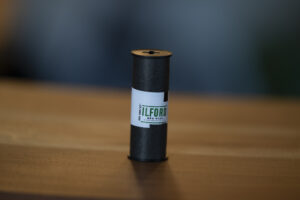
How 120 Camera Film Is Made: Inside the Craft of Medium Format Photography
In a world increasingly dominated by digital photography, medium format film—especially 120 film—retains a loyal following among enthusiasts, professionals, and artists who appreciate its fine detail, wide dynamic range, and immersive aesthetic. But have you ever wondered how this iconic format is made?
I’ve always wished I could make my own film, to finish out the do-it-yourself aspect of my medium format journey, although creating film is not going to be possible for me. It’s complicated to say the least.
The creation of 120 film is a sophisticated, multi-step process that involves chemistry, precision coating, and mechanical engineering. Here’s an inside look at how rolls of 120 film come to life.
A Quick Primer: What Is 120 Film?
120 film is a roll film format introduced by Kodak in 1901 for the Brownie No. 2 camera. Unlike 35mm film, which comes in a lightproof cartridge, 120 film is a paper-backed roll designed for use in medium format cameras. It delivers images that are significantly larger—typically 6×4.5 cm, 6×6 cm, or 6×7 cm—allowing for much greater resolution and tonal gradation. Because the roll is paper-backed, it’s important to not let it become loose on the roll, as that can allow light to seep onto the film.
Step 1: Emulsion Chemistry
The soul of photographic film is its light-sensitive emulsion. This emulsion consists of:
- Silver halide crystals (usually silver bromide, sometimes with silver chloride or iodide)
- Gelatin, which acts as the suspension medium
- Additives to control grain, contrast, and sensitivity
The silver halide crystals are the photosensitive agents that record the image. Their size and distribution determine the film’s speed and grain structure—fine-grain emulsions like Kodak Portra 160 have smaller crystals, while faster films like Ilford Delta 3200 use larger ones.
The emulsion is mixed in ultra-clean environments to prevent contamination. It’s heated and stirred to control crystal growth, then cooled and stored until ready for coating.
Step 2: Base Material
The emulsion needs a substrate, or film base, which is usually made of polyester (PET) or triacetate. This transparent base is:
- Durable and flexible
- Chemically stable over decades
- Manufactured in long rolls, often thousands of feet at a time
Color films require additional sub-layers, such as an anti-halation backing and UV protection layers, to manage light scatter and color accuracy.
Step 3: Precision Coating
Coating is one of the most technically demanding stages. Using a machine called a coating line, the emulsion is:
- Precisely layered onto the film base using multi-slot die coating or curtain coating
- Dried in a temperature- and humidity-controlled environment
- Inspected in-line for consistency in thickness, defects, and coating uniformity
Color films are especially complex—they require multiple emulsion layers, each sensitive to different colors of light (red, green, and blue), with interlayers in between to prevent color contamination.
Step 4: Cutting and Slitting
Once coated and dried, the master roll of film—often a few thousand feet long—is slit into narrower strips that match the width of 120 film (approximately 61mm).
Each strip is then:
- Inspected again
- Cut to the proper length (~80cm to 90cm per roll)
- Spliced onto a black paper backing with printed frame numbers and arrows for alignment in cameras
The paper leader and trailer protect the film from light and help with loading.
Step 5: Spooling and Finishing
The prepared film-and-paper sandwich is then:
- Tightly wound onto a plastic or metal spool
- Sealed with a paper band and adhesive label
- Packaged into a light-tight wrapper, often with moisture and gas barriers
- Boxed with expiration date and batch number
Color films may also undergo a pre-aging or refrigeration process to stabilize the emulsion before distribution.
Quality Control
Throughout the process, manufacturers perform:
- Sensitometric testing to verify film speed, contrast, and dynamic range
- Chemical analysis of emulsions and coatings
- Physical testing of base thickness, spool tightness, and frame alignment
Top brands like Kodak, Ilford, and Fujifilm all maintain rigorous QA standards to ensure consistency and reliability, which is why film remains viable even after decades of storage if kept properly.
A Fragile, Handmade Legacy
Despite modern precision equipment, film manufacturing still involves a great deal of manual labor, craftsmanship, and deep knowledge of chemistry and physics. With most production concentrated among just a few remaining facilities—like Kodak’s Rochester plant or Ilford’s site in Mobberley, England—each roll of 120 film is a small miracle of engineering and analog art.
Next time you load a roll of 120 into your Hasselblad, Mamiya, or Rolleiflex, take a moment to appreciate the journey behind that roll. From crystalline chemistry to precision coating and final packaging, the making of 120 film is a process rooted in history, science, and passion. In an era of instant pixels, it’s a tangible reminder that true image-making still involves a touch of magic.
Purchasing gear from the above link helps me keep the site going!