
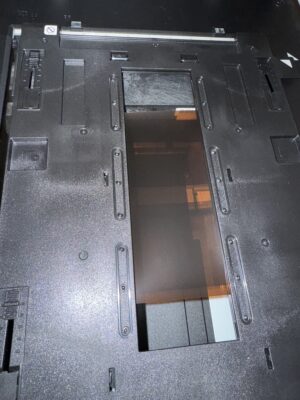
If you’re struggling with dust and newton rings scanning images with your Epson, This may be the solution for you. I find myself preferring this method even over wet mounting. Simply take the 120 frame that comes with the scanner, and remove the clear plastic window. Next, lay the frame upside down on a clean table and slide the film into the grooves that used to hold the plastic window. See image above. This method produces zero newton rings because the film is not directly contacting anything. It also is much better for dust and lint because you’ve removed the statically charged piece of clear plastic, and there’s no film-plastic interface to trap dust. Voilà!
I try to be as chemical-free as possible when developing film. If there’s a natural alternative I’m going to use it. If there’s a way to delete a chemical altogether, I’d rather find it. This method allows me to scan without the use of mounting fluid. The fumes from scanning fluid were making me feel quite strange, even in a well ventilated area.
The Hidden Risks of Wet Scanning: Naphtha Toxicity and Health Concerns with Scanning Fluids
Wet scanning is a technique widely used in high-resolution film digitization. By applying a fluid between a negative and a scanning surface, photographers can minimize dust, reduce scratches, and enhance clarity. One popular choice among professionals is Kami scanning fluid, prized for its low surface tension, fast drying time, and optical clarity. However, these benefits come with a lesser-discussed downside: the toxicity of its core ingredient — naphtha.
As wet scanning gains popularity in the analog revival, it’s essential to understand what naphtha is, how it can affect your health, and why using these solvents without proper precautions can pose serious risks.
What Is Naphtha?
Naphtha is a general term for a class of volatile, flammable hydrocarbon solvents distilled from petroleum or coal tar. It is a complex mixture that can vary by manufacturer but often includes aliphatic hydrocarbons (like hexane or heptane) and trace aromatic compounds (like benzene derivatives).
There are two main types:
- Light naphtha (used in fuels, solvents, and adhesives)
- Heavy naphtha (used in petrochemical refining)
Scanning fluids like Kami are formulated from refined light petroleum distillates — a high-purity form of naphtha designed to evaporate quickly and leave no residue. But just because a solvent evaporates cleanly doesn’t mean it’s safe.
Why Scanning Fluids Like Kami Are a Health Concern
Kami and similar wet-mount fluids (such as Prazio or Lumina) are marketed as professional-grade products, but they typically include naphtha-based hydrocarbons. These solvents can enter the body through:
- Inhalation of fumes
- Skin absorption
- Accidental ingestion (via hand-to-mouth contact)
1. Inhalation Hazards
Naphtha vapors are neurotoxic and respiratory irritants. Prolonged or repeated inhalation can cause:
- Dizziness, nausea, and headaches
- Fatigue and confusion
- Damage to the central nervous system
- Respiratory inflammation
In poorly ventilated areas — such as a home scanning setup or a darkroom — vapor concentration can quickly rise to unsafe levels.
2. Skin Absorption and Dermatitis
Naphtha easily penetrates the skin’s natural barrier, stripping away oils and leading to:
- Dry, cracked skin
- Contact dermatitis
- Increased permeability to toxins
Repeated exposure can cause sensitization, meaning future exposures lead to stronger allergic or inflammatory reactions.
3. Long-Term Health Risks
Some naphtha formulations may contain or be contaminated with benzene or other aromatic hydrocarbons — known carcinogens and hematotoxic agents. Chronic exposure to naphtha and related compounds has been linked to:
- Liver and kidney damage
- Blood disorders (e.g., aplastic anemia, leukopenia)
- Potential carcinogenicity (depending on composition)
Even though high-grade scanning fluids are refined to minimize these risks, no naphtha-based product is entirely free from health concerns, especially with repeated use over time.
If scanning is an enjoyable hobby for you, you’ll likely do it for years. Inhaling these vapors for years can’t be good.
Purchasing gear from the above link helps me keep the site going!