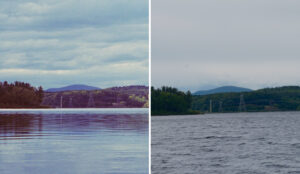
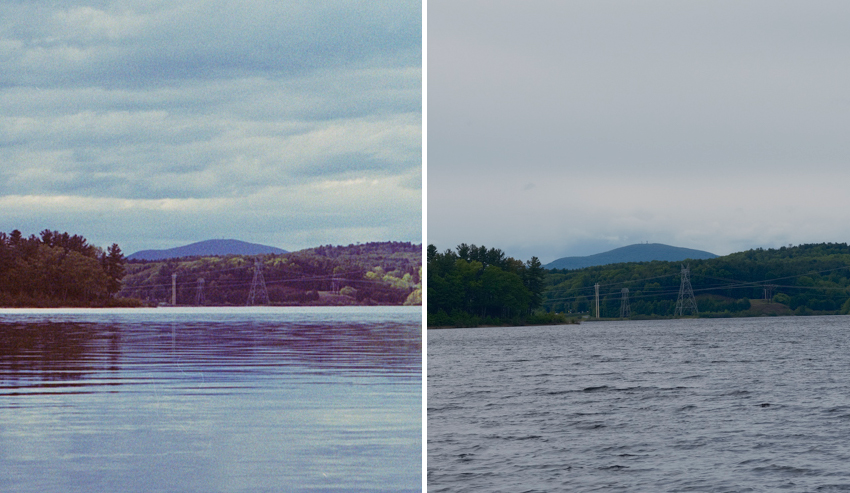
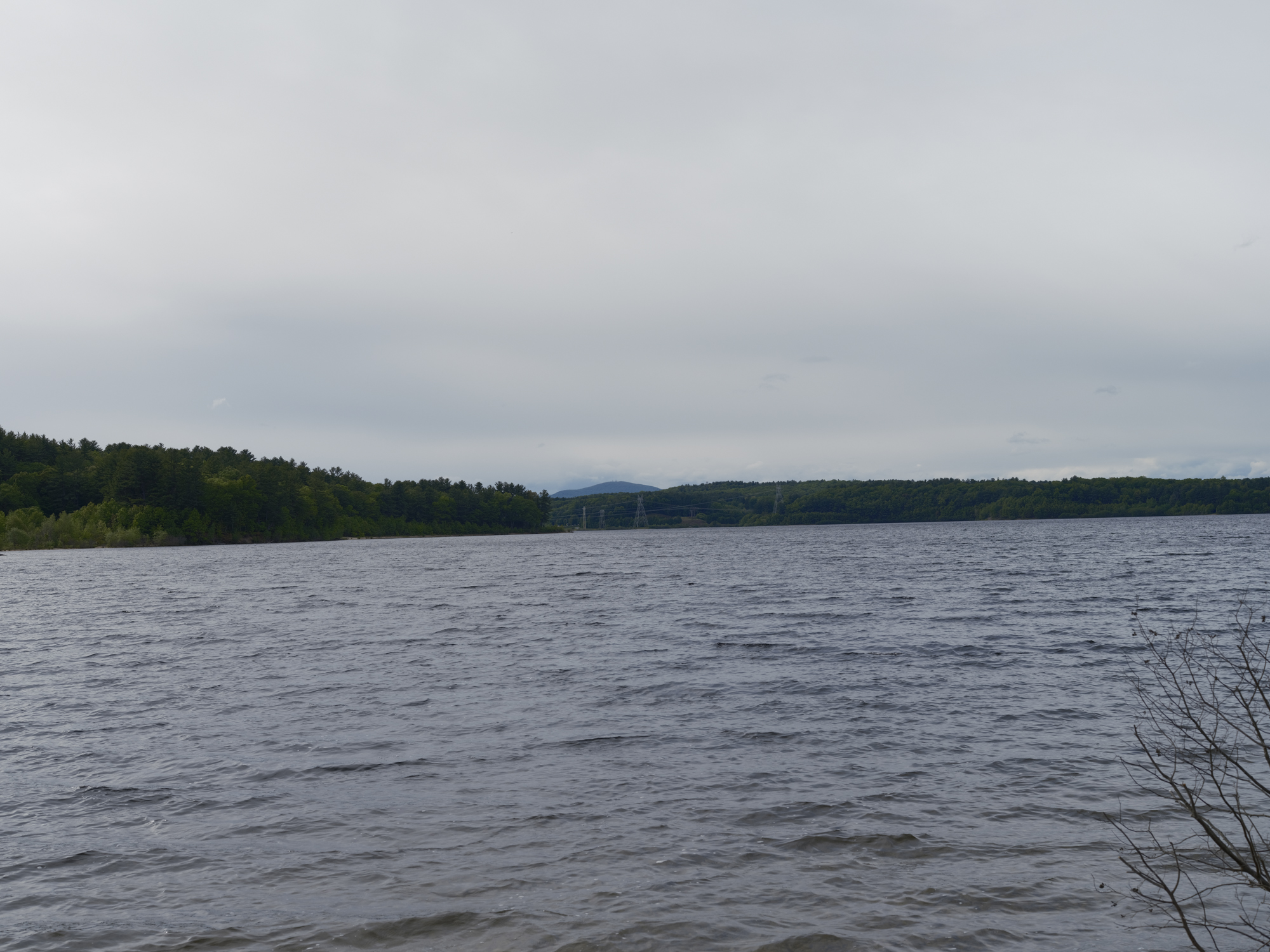
These are 100% crops. The image on the left was shot with the Hasselblad 500cm with Kodak Portra 400 film. The image on the right was shot with the Fujifilm GFX 100s. Lenses were the Zeiss 80mm f2.8 on the Hasselblad, and GF 63mm f2.8 on the GFX 100s. These images were shot on two different days. The water was more choppy in the GFX image, as well as overcast with stratus clouds. The GFX image is clearly sharper, without the heavy grain of the film image. Below are the full images, downsized for the web.
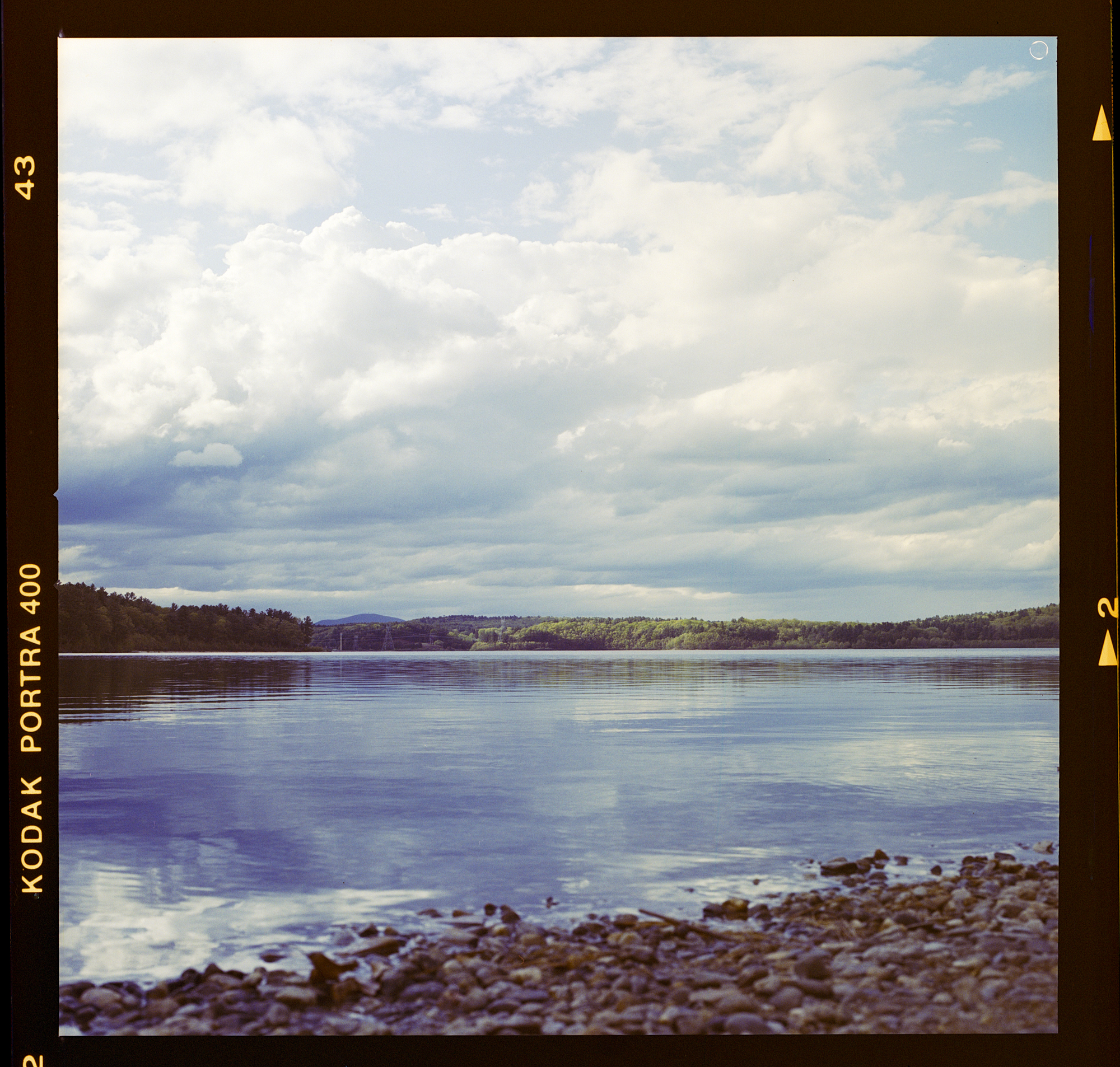
Hasselbad 500cm on Kodak Portra 400
Fujifilm GFX 100s
Clearly, the Hasselblad image is the more beautiful of the two, but it was also shot on a nicer day. The sun poking through the clouds, and the calm water, led to a more pleasing image.
The only thing I can really show from this comparison is the amount of film grain introduced into the image from Kodak Portra 400 compared to the much cleaner image of the GFX 100s. The images are more clinical than film.
Overall Aesthetic & Feel
Hasselblad 500cm + Kodak Portra 400
- Mood: Rich, painterly, and organic. The film introduces subtle pastel hues and a nostalgic softness.
- Color Palette: Warm mid-tones with natural but slightly stylized color shifts (e.g., the purples in the shadows and greens in the trees).
- Highlight Roll-off: Very gentle—cloud details remain soft and pleasant, with a natural gradient between highlights and midtones.
- Dynamic Range: Film handles highlights gracefully but loses some fine shadow detail compared to digital.
Fujifilm GFX 100S
- Mood: Technically clean and sharp with modern, neutral rendering.
- Color Palette: More clinically accurate, with less inherent color bias—blues are cooler, greens are deeper but less stylized.
- Highlight Roll-off: Digital roll-off is more abrupt. Clouds look flatter and can clip quicker without exposure bracketing.
- Dynamic Range: Superior shadow recovery and microcontrast in dark areas. Much more recoverable detail across the exposure range.
🔍 Film Grain vs. Digital Detail
Film Grain (Portra 400)
- Texture: Subtle, fine grain present especially in the sky and water reflections. Adds organic depth and texture.
- Character: Gives the image life and imperfection—there’s a certain vibrancy that’s felt rather than measured.
- Resolution Limit: Even with a good scan, the resolving power of film is lower than digital, but pleasing.
Digital (GFX 100S)
- Sharpness: Incredible detail, even in distant trees and ripples in the water. Every texture is rendered precisely.
- Noise: Virtually none at base ISO. Images are ultra-clean, which can feel a bit sterile compared to film.
- Clarity: Edges are crisp, and lens contrast is high—feels almost hyper-real compared to the dreamy film rendering.
🎞️ Medium Format Look
Both images carry the hallmarks of medium format photography, but the look diverges:
Film Medium Format (Hasselblad)
- 3D Pop: Subtle, due to softer microcontrast and the lower resolving power of film.
- Color Rendering: Signature Kodak Portra tones—gentle, skin-friendly, pastel leaning. It’s not strictly realistic but highly pleasing.
- Image Depth: More painterly transitions between tonal zones; feels less clinical and more atmospheric.
Digital Medium Format (GFX 100S)
- 3D Pop: Much more apparent. High resolution and lens sharpness create clear foreground/background separation.
- Color Rendering: Accurate and faithful. Less character baked in, but more control in post.
- Image Depth: Stunning detail at every level, but may lack some of the subtle emotion that film grain imparts.
📸 Composition & Framing
- The film image includes the iconic film border and square 6×6 aspect ratio, adding to the nostalgic aesthetic.
- The digital image is shot wider (4:3 or 3:2 aspect), which provides more horizontal context but feels less intimate.
🧠 Subjective Takeaway
- Film (Hasselblad + Portra): Evokes mood, memory, and imperfection. It’s artful, ideal for emotional storytelling.
- Digital (GFX 100S): Excels in precision, realism, and clarity. It’s technical, perfect for commercial and fine art work where control is key.
🔚 Final Thought
Both mediums excel in different ways:
- If you’re seeking emotion, atmosphere, and timelessness, film wins.
- If you want precision, dynamic range, and absolute control, digital reigns.
But together? You get the best of both worlds—something you’re clearly exploring beautifully in your photography.
Want to dive deeper into film vs GFX? Check out my other article comparing the Pentax 67 to GFX 100s
Purchasing gear from the above link helps me keep the site going!
The photographer obviously shot the photos at different times, look at the waves! It’s not a legitmate comparison now, is it?
Someone didn’t read the article 🙂