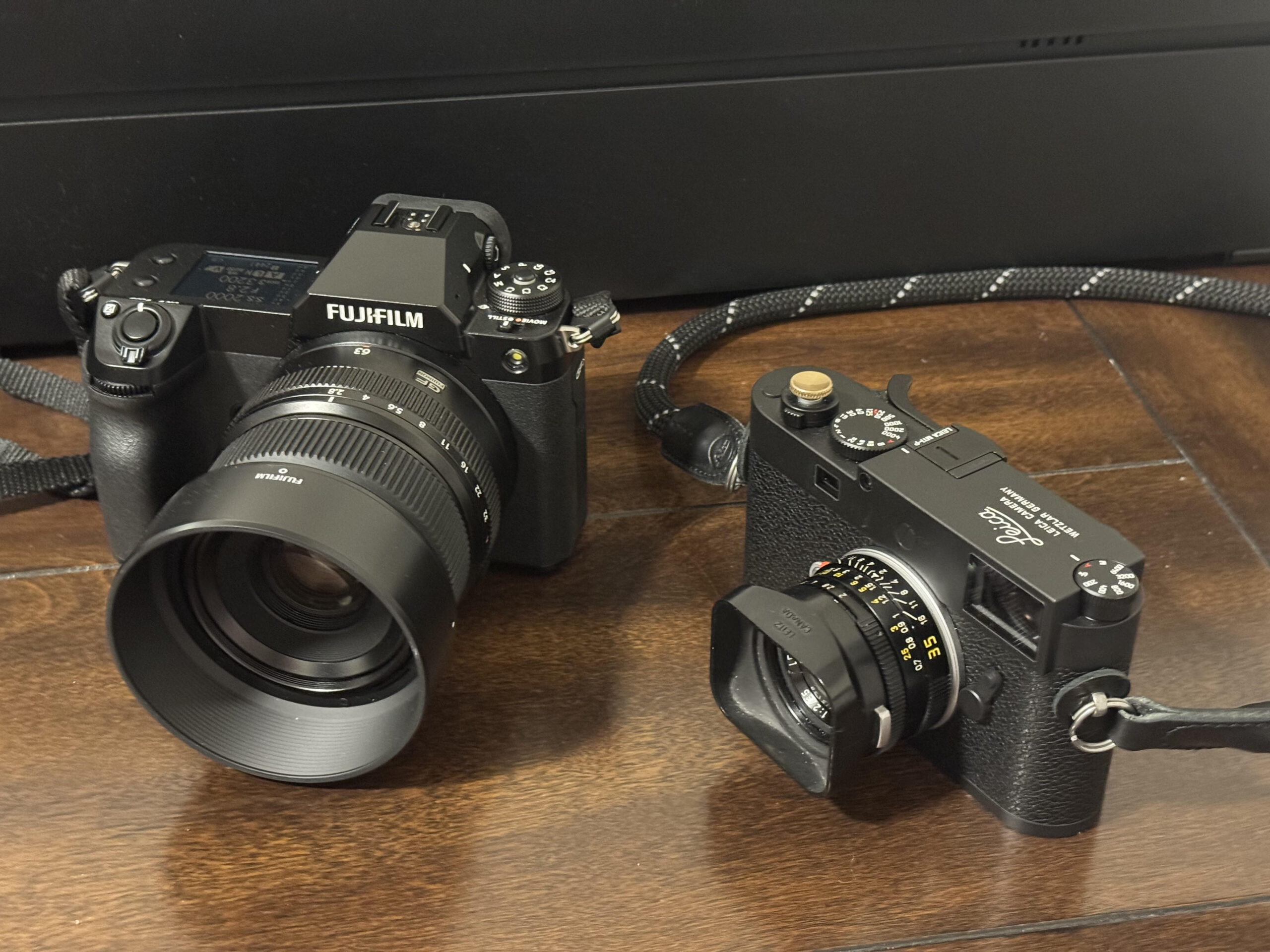
The above image is my Leica M11-p next to the GFX 100s
Search Fujifilm GFX Cameras at KEH.com
How I got here is an interesting journey. I confess that some of it was gear acquisition syndrome. This desire of always chasing the highest image quality I could find. Originally, when I was primarily a Nikon shooter, I would test lens after lens looking for that special look. I didn’t really know what that look was.
On a whim, I bought a Fujifilm GFX 50s and was amazed by the quality. I eventually upgraded to the GFX 100s. That’s not entirely accurate. I bought a GFX 100ii and realized it was just too much camera for me, and I finally settled on the GFX 100s.
After shooting with the GFX for a few years, there was something pulling me back to smaller systems. The GFX image quality is top-notch for digital, but I can began to realize that I’m ok sacrificing some of that quality for portability and looking less conspicuous in the field. I didn’t know much about Leica rangefinder systems, but I took the leap and bought a Leica M11-P.
Two Philosophies, One Obsession: Image Quality
On paper, comparing the Fuji GFX system to the Leica M makes no sense. One is a medium format mirrorless powerhouse built for resolution and dynamic range. The other is a compact rangefinder descended from film cameras of the 1950s. And yet, photographers serious about image quality often find themselves weighing these two very different paths.
I now shoot both systems — the GFX 100S and the Leica M-11P — and I’ve come to think of them not as competitors but as complementary tools that reveal what you actually prioritize as a photographer.
The Case for GFX: When Resolution and Dynamic Range Matter
The GFX system delivers something no full-frame camera can match: the look and latitude of a larger sensor. The GFX 100S packs 102 megapixels into a sensor that’s roughly 1.7x larger than full frame, and the results are immediately visible — especially in large prints or when cropping aggressively.
Where GFX excels:
- Landscape and architectural photography — the dynamic range handles high-contrast scenes beautifully, and the resolution captures extraordinary detail
- Studio and commercial work — medium format has long been the standard for fashion, product, and portrait work for good reason
- Heavy cropping — with 102MP, you can reframe significantly in post and still have a high-resolution image
- Tonal transitions — the larger photosites produce smoother gradations, particularly noticeable in skin tones and skies
The GFX system also benefits from excellent autofocus (especially in newer bodies like the GFX100S II and GFX100 II), in-body stabilization, and a growing lens lineup that includes some genuinely stellar glass.
The Case for Leica M: When the Image Is More Than Pixels
The Leica M-11P with its 60 megapixels is no slouch in resolution, but that’s not really why people buy into the M system. The appeal is harder to quantify: lens rendering, shooting experience, and a certain quality of image that M shooters often describe as “three-dimensional” or having “pop.”
Where Leica M excels:
- Street and documentary photography — the compact size, quiet shutter, and manual focus make it unobtrusive and fast
- Travel — a body and two or three lenses fit easily in a small bag; you’ll actually take it with you
- Lens character — Leica M glass has a rendering quality that’s difficult to replicate; the way a Summilux 35mm or 50mm draws is distinctive
- The shooting experience — the rangefinder patch, the mechanical focus, the minimal interface; it forces a slower, more intentional approach
There’s also something to be said for the M system’s longevity. Lenses from decades ago mount and perform beautifully on the M-11P. It’s a system built around optical heritage rather than spec-sheet competition.
Direct Comparison: GFX 100S vs. Leica M-11P
| Fuji GFX 100S | Leica M-11P | |
|---|---|---|
| Sensor Size | 43.8 x 32.9mm (Medium Format) | 36 x 24mm (Full Frame) |
| Resolution | 102 MP | 60 MP (with 36MP and 18MP options) |
| Body Weight | 900g | 530g |
| Autofocus | Hybrid AF with face/eye detection | Manual focus only (rangefinder) |
| Stabilization | 6-stop IBIS | None |
| Native ISO Range | 100–12,800 | 64–50,000 |
| Ideal Use | Landscape, studio, commercial | Street, travel, documentary |
What About the Lenses?
This is where the conversation gets interesting. Fuji’s GF glass is technically excellent — sharp, well-corrected, and consistent. The GF 110mm f/2 and GF 80mm f/1.7 are standouts that deliver beautiful rendering along with their resolving power.
But Leica M lenses have something else: character. The Summilux and Summicron lines produce images with a rendering that photographers have described for decades as “the Leica look.” It’s a combination of micro-contrast, bokeh quality, and color rendering that’s more about aesthetics than measurements.
Is that character worth the trade-off in resolution and sensor size? That depends entirely on what you’re photographing and what you value in your images.
Practical Considerations
Size and Weight
The Leica M-11P with a Summicron 35mm weighs about 750g total. The GFX 100S with the compact GF 50mm f/3.5 comes in around 1,145g. That difference compounds when you’re walking all day or packing for a trip. The Leica wins decisively for portability.
Speed and Responsiveness
If you’re photographing moving subjects, the GFX’s autofocus system is the obvious choice. The M system’s manual focus and rangefinder patch require practice and aren’t suited to fast action. For deliberate, composed work, however, the M’s simplicity is a feature rather than a limitation.
Low Light
Despite the M-11P’s smaller sensor, it holds up remarkably well at high ISO — arguably better than the GFX in some situations due to its more modern sensor technology. The lack of IBIS on the Leica is the bigger practical issue in low light.
Cost
Neither system is inexpensive. A GFX 100S body runs around $5,000, while the M-11P is about $9,000. Lenses for both systems are premium-priced, though Leica M glass is generally more expensive than Fuji GF equivalents.
Who Should Choose What?
Choose the GFX system if:
- Maximum resolution and dynamic range are priorities
- You print large or crop heavily
- You need autofocus for your work
- Studio, landscape, or commercial photography is your focus
Choose the Leica M system if:
- Portability and discretion matter to you
- You value lens character and rendering over pure resolution
- You enjoy (or want to learn) manual focus and rangefinder shooting
- Street photography, travel, or documentary work is your focus
Choose both if:
- You’re fortunate enough to have the budget and recognize that different tools serve different purposes
My Take
After shooting both systems extensively, I’ve stopped thinking of them as an either/or decision. When I’m heading out for a dedicated landscape session or studio work, the GFX 100S comes with me. When I want to travel light, shoot street, or simply enjoy the process of making photographs, I reach for the M-11P.
The GFX delivers images I couldn’t get any other way — the resolution, the tonal depth, the way it handles challenging light. But the Leica delivers an experience I couldn’t get any other way, and produces images with a quality that’s harder to measure but immediately recognizable.
Both make me a better photographer, just in different ways.
Search Fujifilm GFX Cameras at KEH.com
Search Leica M-11 Cameras at KEH.com
Do you shoot medium format or rangefinder? I’d love to hear how you think about the trade-offs. Drop a comment below or reach out — I’m always happy to talk cameras.
Example Images
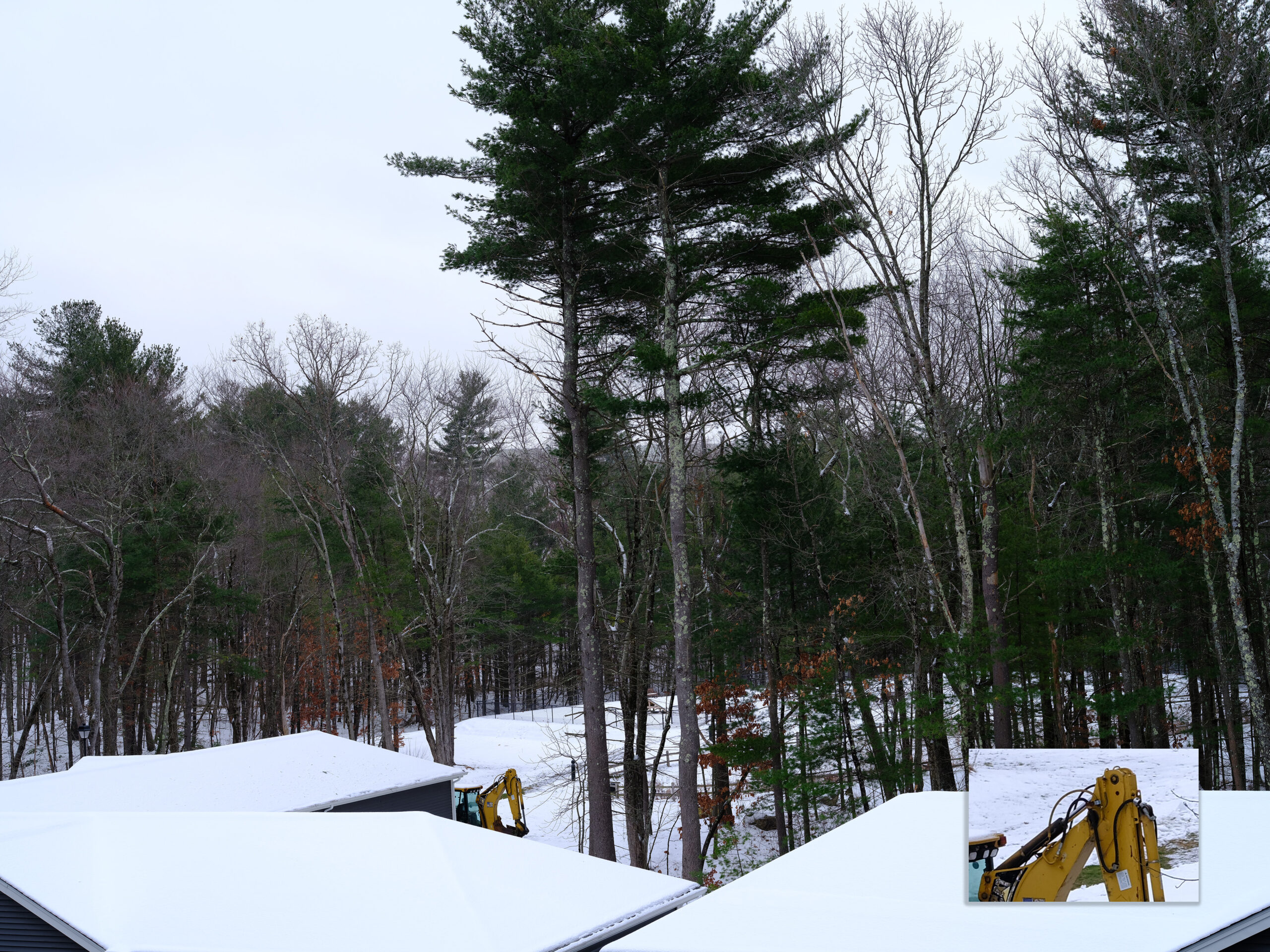
The image below was taken with the GFX 100S and 63mm f2.8 GF lens.
The image below was taken with the Leica M11-P paired with the Voightlander 50mm f1.1.
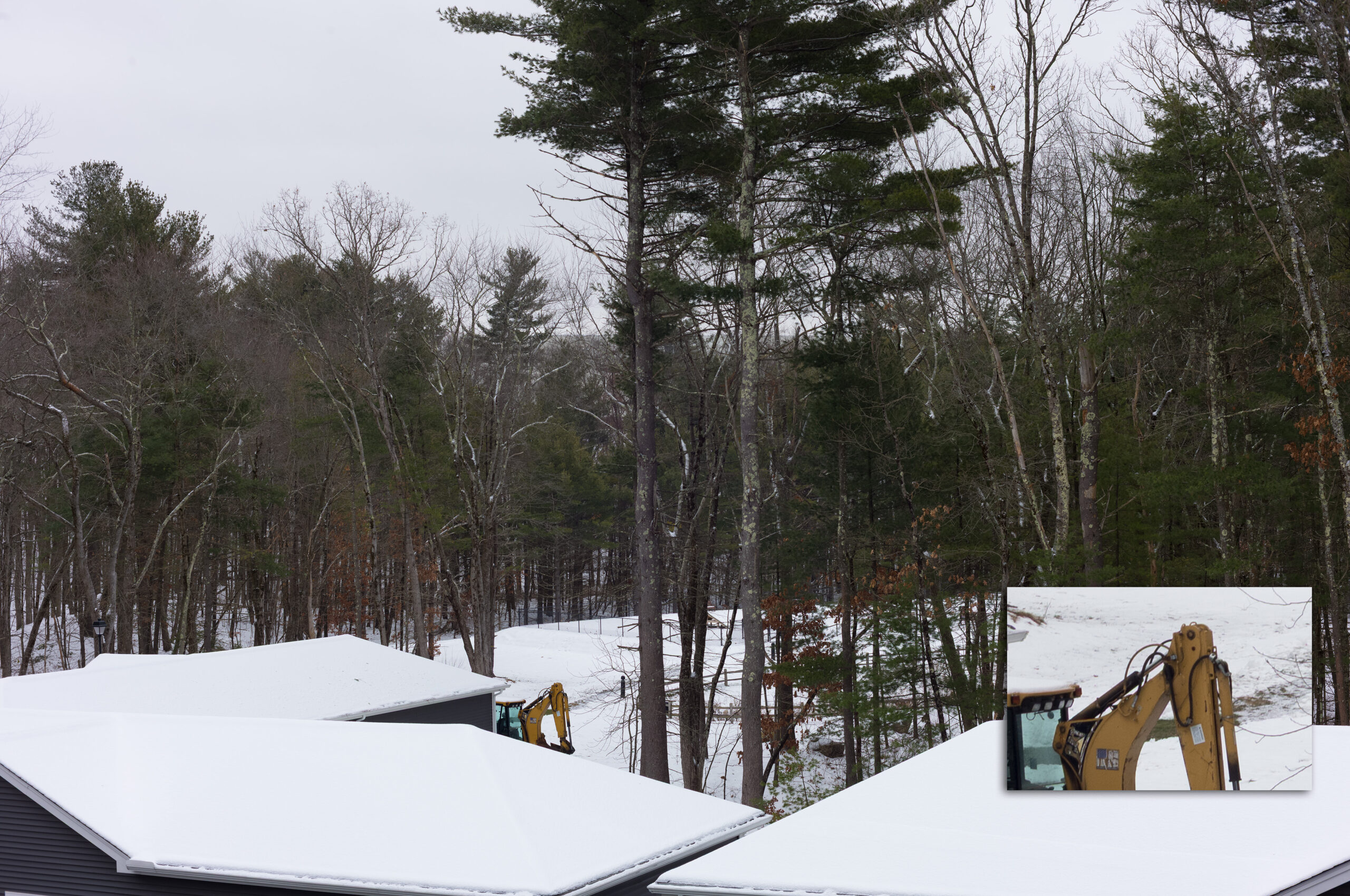
Both images were taken at f8. You can see that the cropped 100% overlay from the GFX 100s is just slightly clearer than the Leica. This makes sense since we’re comparing 102mp with 60mp. Something odd is that the 63mm GFX lens seems wider than the 50mm Voightlander on the Leica.
I realize this is a difficult comparison because we’re not only comparing cameras here, but also lenses, and the Voightlander I chose is not even Leica.
Purchasing gear from the above link helps me keep the site going!