Medium Format Photography

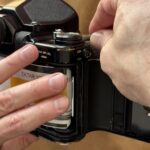
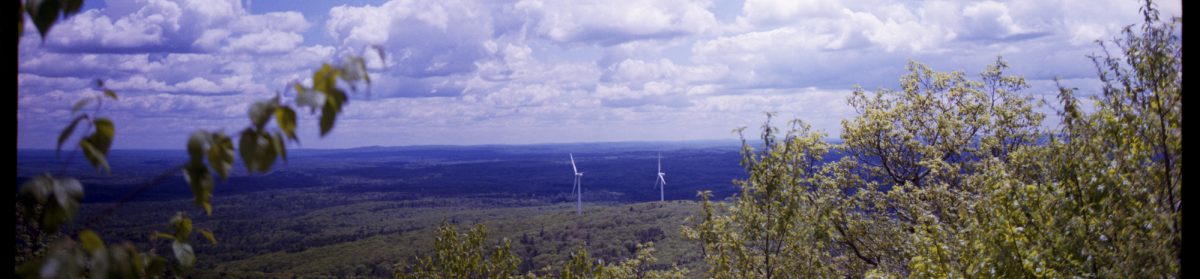
Pentax 67 shot on Portra 400

Exploring the Beauty of Film, One Frame at a Time

Welcome to my little corner of the internet dedicated to medium format photography. Whether you’re curious about this captivating format, looking to reconnect with the tactile magic of film, or searching for practical guidance on getting started, you’re in the right place.

Use the menu to the right to explore recent images, gear reviews, and tips for improving your medium format work.

My site is a bit of highlighting where I go wrong with medium format, so that I can help others not make the same mistakes. I also showcase test shots I’ve taken with various medium format cameras, and medium format film stocks.

My Journey to Medium Format Photography

When I first picked up a camera, digital photography didn’t exist. I learned on 35mm film with Nikon bodies, developing an appreciation for the slow, intentional process that film demands. When digital cameras became accessible, I embraced the technology fully—the instant feedback, the unlimited frames, the evolving tools. For nearly two decades, digital served me well.

But something was missing.

After years of shooting digital, I found myself drawn back to film. Not just any film, but medium format photography specifically. The format struck the right balance for me: it delivers resolution and tonal depth that 35mm can’t match, yet doesn’t require the weight, setup time, and deliberate pace of large format work. After wrestling with 4×5 and 8×10 view cameras—beautiful but demanding systems—I discovered that medium format photography occupies a sweet spot between image quality, shooting pace, and creative satisfaction.

Today, I shoot across multiple systems:

4×5 and 8×10 large format – For those extra deliberate, meditative shoots

Nikon digital and legacy lenses – I’ve owned over 100 Nikon lenses throughout my photography journey

Fujifilm GFX – Digital medium format with superb image quality and fantastic dynamic range

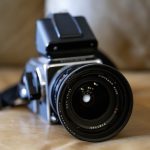
Hasselblad 500cm – My introduction to medium format film photography

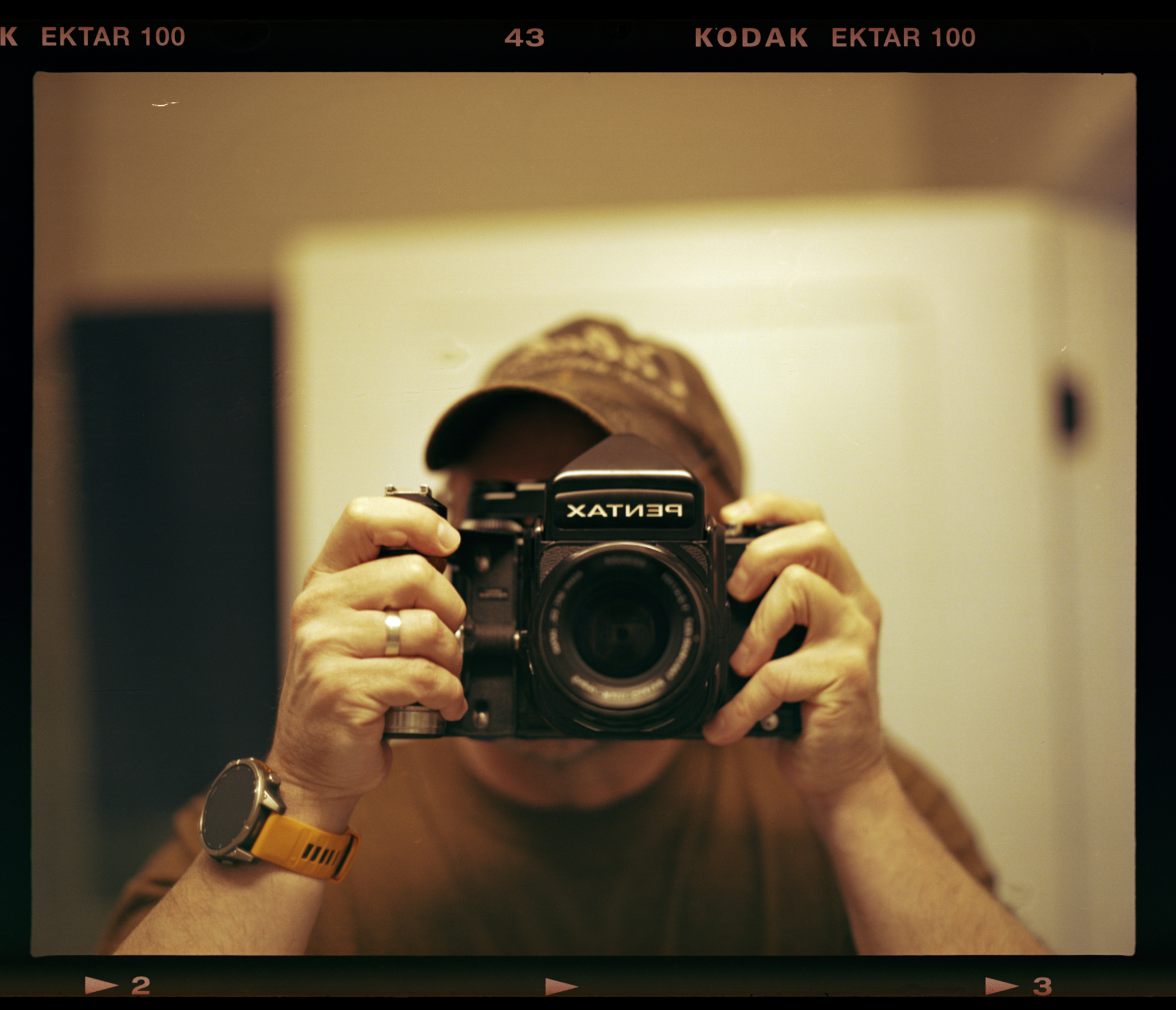
Pentax 6×7 – A recent addition I’m eager to explore

What Is Medium Format Photography?

Medium format photography refers to any camera system using film or sensors larger than standard 35mm (24×36mm) but smaller than large format (4×5 inches and beyond). The term encompasses both classic film cameras shooting 120 or 220 roll film and modern digital systems like the Fujifilm GFX series and Hasselblad X cameras.

The “medium” designation places these systems between the compact convenience of 35mm and the expansive capabilities of large format. This middle ground is precisely what makes medium format photography so appealing—you gain significant image quality advantages without the bulk and workflow constraints of sheet film.

Film Formats and Frame Counts

Medium format film cameras produce various frame sizes depending on the camera design:

  • 6×4.5cm – 15-16 exposures per roll of 120 film
  • 6×6cm (Hasselblad 500 series, Rolleiflex) – 12 exposures per roll
  • 6×7cm (Pentax 67, Mamiya RB67) – 10 exposures per roll
  • 6×9cm (Fujifilm GW690) – 8 exposures per roll
  • 6×17cm panoramic – 4 exposures per roll

The 220 film format offers twice the length of 120, effectively doubling your frame count, but it’s increasingly difficult to find and not all cameras support it.

It might seem counterintuitive to want fewer frames per roll, but that limitation is part of what makes medium format photography special. Each exposure carries weight. You compose more carefully, consider your settings more deliberately, and feel the anticipation build as you work through a roll. Unlike 35mm’s 36-exposure standard—which always felt like too many frames to shoot before I could develop and see results—medium format’s economy forces intentionality.

Why Medium Format Produces Superior Images

The advantages of medium format photography stem from simple physics: larger capture areas gather more light and resolve more detail.

Greater resolution and detail. A 6×6cm negative has roughly 3.6 times the surface area of a 35mm frame. This translates directly to finer grain structure in film and higher pixel counts in digital sensors. Medium format negatives can produce stunning enlargements that reveal details invisible in smaller formats.

Shallower depth of field. To achieve the same field of view as a 35mm lens, medium format requires longer focal lengths. A “normal” lens on 6×6 is 80mm rather than 50mm. These longer lenses produce shallower depth of field at equivalent apertures, giving medium format photography its characteristic three-dimensional quality where subjects separate from backgrounds with creamy, gradual transitions.

Smoother tonal gradations. Larger negatives and sensors capture more information across the brightness range. Shadows hold more detail before falling to black, highlights retain texture longer before clipping to white, and the transitions between tones feel more continuous and natural. This quality is particularly visible in skin tones, skies, and any subject with subtle gradations.

Superior enlargement capability. Whether you’re printing in a darkroom or scanning for digital output, medium format negatives maintain their quality at larger sizes. A 16×20 print from a 6×7 negative looks crisp and detailed where the same enlargement from 35mm begins showing grain and softness.

Why Shoot Film in the Digital Age?

In an era when AI can generate photorealistic images from text prompts and every smartphone includes computational photography that rivals dedicated cameras, film photography might seem anachronistic. But that apparent obsolescence is precisely what gives medium format film photography its enduring appeal.

Film demands presence. Digital photography allows—even encourages—a spray-and-pray approach. Shoot hundreds of frames, delete the failures, keep the lucky ones. Film inverts this relationship entirely. With 10 or 12 exposures per roll, each frame costs money and represents an irreversible commitment. You can’t chimping the LCD to check your work. You must be present, attentive, and confident before pressing the shutter.

The process creates meaning. There’s a reason people still paint despite photography, still write letters despite email, still cook despite restaurants. The process itself carries value beyond the output. Loading film, composing on a ground glass, waiting for development—these rituals transform photography from image capture into craft practice.

Imperfection conveys authenticity. In a world of computationally perfect images, film’s organic characteristics stand apart. Grain isn’t noise to be eliminated; it’s texture that confirms reality. Color shifts aren’t errors; they’re the signature of specific emulsions. Light leaks, processing artifacts, and happy accidents become distinguishing features rather than flaws to fix in post.

Physical artifacts matter. A negative exists as a tangible object, independent of any digital system or storage medium. Decades from now, those negatives will remain viewable with nothing more than a light source and a magnifier—no software updates, file format conversions, or hard drive recoveries required.

Common Issues with Medium Format Film

Medium format photography rewards patience and punishes carelessness. As I’ve learned firsthand, the format presents challenges you won’t encounter in digital work.

Development Issues

The image below demonstrates several problems that can occur during home development. Dust, fibers, and processing errors are all common hazards.

This test shot shows what happens when chemistry goes wrong. My best guess is that the blix solution (combined bleach and fixer) was exhausted and failed to fully process the emulsion. There’s also a fiber visible near the center—a reminder that medium format’s larger negatives attract and display more debris. The rest of the roll processed normally, making this a mystery I haven’t fully solved. Digital medium format eliminates these variables entirely, but working through them is part of what makes film engaging.

Double Exposures and Handling Errors

The Hasselblad system’s modularity—one of its greatest strengths—introduces handling considerations that can catch you off guard.

The Stakes Are Real

This next image shows why film photography can be simultaneously frustrating and meaningful:

This double exposure occurred because I removed the film back to inspect it, then advanced the body without the back attached. The Hasselblad’s interlock system prevents the shutter from firing when the dark slide is inserted, but the film advance mechanism operates independently. Remove the back, cock the shutter, replace the back, and you’ve got an unintended double exposure.

Of course, this same “quirk” becomes a feature when double exposures are your goal. The ability to pre-plan multiple exposures on a single frame opens creative possibilities that most modern cameras don’t offer.

The Hasselblad 500cm: My Medium Format Foundation

Image of the Hasselblad 500cm

I chose the Hasselblad 500cm to begin my medium format film journey for several compelling reasons:

Complete modularity. The 500cm separates into distinct components—body, lens, viewfinder, and film back—each of which can be swapped independently. This design allows you to carry multiple loaded backs for fast film changes in the field, switch between waist-level and prism finders depending on the situation, and adapt the system to various shooting styles.

Fully mechanical operation. The 500cm requires no batteries for any function. The Compur leaf shutters in the lenses are mechanically governed, and the body’s mirror and film advance mechanisms are purely mechanical. This camera will function identically in fifty years as it does today, requiring nothing more than occasional servicing.

Timeless design and system longevity. The V-system Hasselblads have been in production since 1957, with lenses, backs, and accessories remaining compatible across decades. The used market offers abundant options, and Hasselblad still services these cameras. You can even purchase a digital back that converts this 70-year-old design into a modern digital medium format camera.

Waist-level viewing. I prefer composing on a ground glass with the camera at chest level rather than pressed against my face. The waist-level finder creates a more contemplative shooting experience—you’re looking down into a representation of the scene rather than through a window at it. The image appears reversed left-to-right, which initially confuses but eventually becomes natural and even helps compositional decisions.

Working with the Zeiss 80mm f/2.8 Planar

The lens I acquired with the 500cm is the Zeiss 80mm f/2.8 Planar—the only f/2.8 lens available for this system. Most Hasselblad lenses have maximum apertures of f/4 or slower, and after shooting with the 2.8 Planar, I understand why.

Nailing focus with the Hasselblad at f/2.8 is genuinely difficult. The waist-level finder’s ground glass, while beautiful for composition, provides limited focus precision at wide apertures. The depth of field at f/2.8 on a 6×6 negative is razor-thin, and the combination of manual focus, no focus confirmation, and a dim viewfinder makes consistent results challenging.

The magnifying hood attachment helps significantly—popping it up provides a closer view of the ground glass center for critical focus—but even with it, f/2.8 requires discipline and practice. Most of my successful portraits with this lens happen at f/4 or f/5.6, where the depth of field provides some margin for error.

Developing and Scanning: Building a Film Workflow

I process all my film at home—both black-and-white and color negative—using tank development. For color work, I use C-41 chemistry, which has become remarkably accessible for home processing. The tank development process is essentially the same as black-and-white: temperature control matters more, but the actual procedure is straightforward.

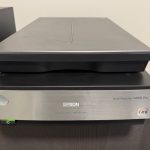
For scanning, I use an Epson V850 flatbed scanner. This dedicated film scanner handles medium format negatives well, though it demands careful technique: proper holder alignment, appropriate scanning resolution, and post-scan processing in Lightroom or similar software.

Looking Toward the Darkroom

My goal is to eventually move away from scanning entirely and embrace optical printing with an enlarger. There’s nothing inherently wrong with scanning—it produces excellent results and offers workflow conveniences—but I want to learn the complete analog process.

I already contact print my 8×10 large format work, and there’s nothing quite like watching a print materialize in the developer tray. The magic of that experience—image emerging from apparently blank paper—doesn’t translate to staring at a scan progress bar.

I’ve also heard from experienced printers that optical enlarging offers greater latitude and control than scanning. Dodging and burning become physical gestures rather than software sliders. Paper choice affects tonality in ways that aren’t replicable with inkjet printing. The feedback loop between exposure, development, and result happens in real time.

Bringing that darkroom experience to medium format photography with a proper enlarger is a near-term goal.

The History of Medium Format Cameras

Medium format photography occupies a special place in the history of image-making, bridging the gap between the convenience of 35mm film and the uncompromising quality of large format sheet film. For over 120 years, 120 roll film has been the foundation of medium format photography, enabling everything from family snapshots to fine art masterpieces and commercial campaigns.

This article traces the evolution of medium format cameras from the humble Kodak Brownie No. 2 of 1901 through the golden age of Hasselblad and Rolleiflex, into the modern era of digital medium format systems capable of capturing 150 megapixels of stunning detail.

The Birth of 120 Film: Democratizing Photography

The 120 film format was introduced by Eastman Kodak in 1901 for the Kodak Brownie No. 2 camera. Priced at just $2 (approximately $75 in today’s currency), this simple cardboard box camera revolutionized photography by making it accessible to the general public. George Eastman’s vision was to move photography beyond professional studios and into the hands of everyday people.

The 120 roll film measures approximately 61mm wide with a backing paper that protects the film and provides frame number markings. Unlike 35mm film introduced later, 120 film has no sprocket holes, allowing the entire film width to be used for the image. This format can accommodate various frame sizes depending on the camera design, including 6×4.5cm, 6x6cm, 6x7cm, 6x9cm, and panoramic formats up to 6x17cm.

What makes 120 film remarkable is its longevity. While dozens of other film formats have come and gone, 120 film has remained continuously available for over 120 years and is still the standard medium format film manufactured today.

The Early Era: Box Cameras and Folding Designs (1901-1928)

The first decades of medium format photography were dominated by simple, affordable cameras designed for amateur photographers. The Kodak Brownie No. 2 (1901-1935) was produced in several versions, all featuring the characteristic box design with a simple meniscus lens and rotary shutter. These cameras produced 6x9cm images (eight exposures per roll) and introduced millions of people to photography.

Folding cameras soon followed, offering improved portability with bellows designs that collapsed flat for carrying. Companies like Kodak, Zeiss, and Voigtländer produced increasingly sophisticated folding cameras throughout the 1910s and 1920s, many featuring better optics and more precise shutters while maintaining the 6x9cm format or introducing the half-frame 6×4.5cm “semi” format.

The Twin-Lens Reflex Revolution (1929-1960s)

The introduction of the Rolleiflex in 1929 by the German company Franke & Heidecke marked a watershed moment in medium format photography. The twin-lens reflex (TLR) design featured two lenses of identical focal length arranged vertically: the upper lens for viewing and focusing, and the lower lens for capturing the image.

This ingenious design allowed photographers to view their composition on a ground glass screen at waist level while the camera remained ready to capture the image instantly. The 6x6cm square format eliminated the need to rotate the camera for vertical compositions, and the bright viewing screen made precise focusing possible even in dim conditions.

The Rolleiflex won the Grand Prix at the 1937 Paris World’s Fair with its Automat model, which introduced automatic frame counting. Throughout the 1940s, 1950s, and into the 1960s, the Rolleiflex became the camera of choice for professional photographers worldwide. Legendary photographers including Richard Avedon, Irving Penn, Diane Arbus, and Vivian Maier created iconic images with Rolleiflex TLRs. The camera’s combination of exceptional build quality, superb Zeiss and Schneider optics, compact size, and intuitive operation made it the gold standard for portrait, fashion, and documentary photography.

The Rise of the Modular SLR: Hasselblad (1948-Present)

In October 1948, Swedish inventor Victor Hasselblad unveiled the Hasselblad 1600F in New York City, introducing the world’s first modular medium format single-lens reflex camera. Unlike the TLR design, the SLR allowed photographers to view exactly what the taking lens saw, eliminating parallax error and enabling the use of interchangeable lenses of different focal lengths.

The Hasselblad’s modular design was revolutionary. Photographers could swap lenses, viewfinders, and film backs, creating a flexible system adaptable to almost any photographic situation. The interchangeable film back proved especially valuable, allowing photographers to switch between color and black-and-white film mid-roll or to shoot multiple exposures on a single setup.

Early 1600F cameras suffered from reliability issues with their complex focal plane shutters, leading to the improved 1000F in 1953 and ultimately the iconic 500C in 1957. The 500C moved the shutter into the lens (leaf shutter), dramatically improving reliability and flash synchronization. This design proved so successful that the 500 series remained in production for over 56 years.

Hasselblad’s most famous moment came with NASA’s Apollo program. Modified Hasselblad cameras documented every manned lunar mission, capturing the first photographs of humans on the Moon in 1969. This association cemented Hasselblad’s reputation as the pinnacle of photographic excellence.

Japanese Innovation: The 6×7 Format (1960s-1990s)

Japanese manufacturers entered the medium format market with innovative designs that expanded the creative possibilities of roll film photography. Mamiya, Pentax, and Bronica introduced cameras that challenged European dominance with advanced features and alternative formats.

The Mamiya RB67 (1970) and RZ67 (1982) became workhorses of commercial and portrait photography. These cameras offered revolving backs that allowed switching between horizontal and vertical compositions without rotating the camera, bellows focusing for close-up work, and a 6x7cm format that enlarged perfectly to 8×10-inch prints.

Pentax introduced the 6×7 (later 67) system that looked and handled more like an oversized 35mm SLR, making the transition from small format more intuitive for many photographers. The legendary landscape photographer Galen Rowell famously used the Pentax 67 to capture some of his most celebrated wilderness images.

The Digital Revolution (1992-Present)

Digital photography came to medium format with the development of digital backs in the early 1990s. Leaf Systems released the first digital camera back in 1992, a 4-megapixel unit nicknamed “the brick” for its substantial size. These backs could be attached to existing medium format camera systems, allowing photographers to transition to digital while retaining their investment in lenses and accessories.

Early digital backs used CCD sensors and were limited to studio use due to slow operation and the need for computer tethering. Phase One and Hasselblad emerged as leaders in this market, progressively increasing resolution from 6 megapixels in the late 1990s to 39 megapixels by 2006 and 60 megapixels by 2008.

A major technological leap occurred in 2014 when Phase One and Hasselblad introduced the first medium format cameras with CMOS sensors instead of CCD. These sensors offered dramatically improved high-ISO performance and faster operation, making medium format digital cameras practical for location and outdoor photography for the first time.

Fujifilm disrupted the market in 2017 with the GFX 50S, offering medium format quality at a fraction of the traditional price. The camera featured a 51.4-megapixel sensor measuring 43.8×32.9mm in a mirrorless body that was significantly more compact than previous medium format systems.

In 2019, Phase One launched the IQ4 series with sensors reaching 150 megapixels on a 53.4×40.0mm sensor, the largest digital sensor available for photography. Hasselblad followed with mirrorless cameras offering 100-megapixel resolution with in-body image stabilization, making hand-held medium format photography practical.

Understanding Sensor Size: Film vs. Digital

One of the most significant differences between medium format film and digital is the actual imaging area. Traditional 120 film cameras capture images at various sizes depending on the format:

6×4.5cm (645): Actual frame size approximately 56×41.5mm (2,324 sq mm)

6x6cm: Actual frame size approximately 56x56mm (3,136 sq mm)

6x7cm: Actual frame size approximately 56x70mm (3,920 sq mm)

6x9cm: Actual frame size approximately 56x84mm (4,704 sq mm)

Digital medium format sensors, however, are generally smaller than their film equivalents. The most common sensor sizes in current digital medium format cameras are:

44x33mm: Used by Fujifilm GFX, Hasselblad X-series (1,442 sq mm, approximately 62% of 645 film)

53.4x40mm: Used by Phase One IQ4 (2,136 sq mm, approximately 92% of 645 film)

For comparison, a full-frame 35mm sensor measures 36x24mm (864 sq mm), making the 44x33mm medium format sensors about 1.7 times larger, while the Phase One 53.4x40mm sensor is approximately 2.5 times larger than full frame.

Historical Medium Format Camera Chart

The following chart presents a chronological overview of significant medium format cameras from 1901 to the present day, spanning the transition from film to digital technology.

YearCameraFormatTypeSignificance
1901Kodak Brownie No. 26x9cmBox CameraFirst camera to use 120 film
1929Rolleiflex Original6x6cmTLR (Film)First Rolleiflex TLR
1932Rolleiflex Standard6x6cmTLR (Film)First Rollei using 120 film
1937Rolleiflex Automat6x6cmTLR (Film)Automatic frame counter
1948Hasselblad 1600F6x6cmSLR (Film)First modular MF SLR
1957Hasselblad 500C6x6cmSLR (Film)Legendary leaf shutter SLR
1965Mamiya C3306x6cmTLR (Film)Interchangeable lens TLR
1969Hasselblad EL6x6cmSLR (Film)Motorized film advance
1970Mamiya RB676x7cmSLR (Film)Revolving back design
1969Pentax 6×76x7cmSLR (Film)35mm-style handling
1982Mamiya RZ676x7cmSLR (Film)Electronic version of RB
1992Leaf DCB36x48mmDigital BackFirst digital MF back (4MP)
2002Hasselblad H16×4.5cmSLR (Film/Digital)First H-system camera
2006Phase One P4536x48mmDigital Back39MP digital back
2008Phase One P65+53.9×40.4mmDigital Back60MP, largest sensor then
2010Pentax 645D44x33mmDSLR (Digital)Affordable digital MF
2014Phase One IQ25044x33mmDigital BackFirst MF CMOS sensor
2016Hasselblad X1D-50c44x33mmMirrorlessFirst mirrorless MF camera
2017Fujifilm GFX 50S44x33mmMirrorlessAffordable mirrorless MF
2019Phase One IQ4 150MP53.4x40mmDigital Back150MP, largest sensor
2019Fujifilm GFX 10044x33mmMirrorless100MP with IBIS
2022Hasselblad X2D 100C44x33mmMirrorless100MP, built-in 1TB SSD
2023Fujifilm GFX 100 II44x33mmMirrorless8K video, fast AF
2024Hasselblad 907X 100C44x33mmMirrorlessSmallest MF body

Digital Sensor Size Comparison

The following table compares digital medium format sensor sizes with traditional 120 film formats and 35mm full frame sensors.

FormatDimensionsArea (sq mm)Cameras Using This Size
120 Film: 6x9cm56 x 84mm4,704Kodak Brownie, Folding Cameras
120 Film: 6x7cm56 x 70mm3,920Mamiya RB/RZ67, Pentax 67
120 Film: 6x6cm56 x 56mm3,136Hasselblad 500, Rolleiflex
120 Film: 64556 x 41.5mm2,324Mamiya 645, Pentax 645, Contax
Phase One Full Frame53.4 x 40mm2,136Phase One IQ4 150MP
Digital MF (44×33)43.8 x 32.9mm1,441Fujifilm GFX, Hasselblad X
35mm Full Frame36 x 24mm864Sony A7, Canon EOS R, Nikon Z
APS-C23.5 x 15.6mm367Fujifilm X-T5, Sony A6000

The Largest Digital Medium Format Sensors

As of 2025, the Phase One IQ4 series features the largest commercially available digital sensor for photography, measuring 53.4 x 40.0mm (approximately 2,136 square millimeters). This sensor is approximately 92% the size of a traditional 645 film frame and 2.5 times larger than a full-frame 35mm sensor.

The 150-megapixel IQ4 sensor produces images of 14,204 x 10,652 pixels, capable of generating prints at 300 DPI that measure 47 x 35 inches. This remarkable resolution, combined with 15 stops of dynamic range and 16-bit color depth, represents the current pinnacle of photographic image quality.

Sony has announced a 247-megapixel sensor of similar size for industrial applications, suggesting that even higher resolutions may become available for photography in the future.

The Enduring Appeal of Medium Format

From the cardboard Kodak Brownie of 1901 to the 150-megapixel Phase One digital backs of today, medium format photography has continuously evolved while maintaining its fundamental advantage: a larger imaging area that captures more light, more detail, and more tonal information than smaller formats.

The 120 roll film format has proven remarkably durable, remaining in production for over 120 years and still serving photographers who appreciate the unique qualities of analog capture. Meanwhile, digital medium format has matured from expensive studio-only equipment into sophisticated mirrorless systems that rival the portability of full-frame cameras while delivering superior image quality.

Whether shooting film in a vintage Hasselblad 500C or capturing 100-megapixel images with a Fujifilm GFX 100 II, medium format photographers continue to pursue the same goal that Victor Hasselblad articulated in the 1940s: to create the ideal camera that combines exceptional image quality with practical usability. The history of medium format is ultimately a story of that ongoing pursuit of photographic excellence.

Join the Journey

Whether you’re a seasoned film photographer or simply film-curious, I hope this site provides inspiration, practical information, and perhaps some entertainment from my ongoing mistakes. Medium format photography isn’t just a capture format—it’s a mindset. Slower, more deliberate, more connected to the fundamental process of making photographs.

I’m still learning. Still experimenting. Still missing focus sometimes. But I wouldn’t trade this experience for the convenience of staying purely digital.

Check back regularly for gear reviews, development tips, scanning experiments, and darkroom explorations. And if you’re starting your own medium format journey, I’d genuinely enjoy hearing about your experience. Reach out anytime.

Let’s explore medium format photography together.