A Deep Dive into the Mechanics — and Longevity — of the Hasselblad 500 Series, Pentax 6×7/67, and Mamiya RB67
Anyone who has spent serious time with medium format cameras has a story about mechanical failure. For many Pentax 6×7 users, that story involves the film advance lever — a deceptively simple-looking mechanism that conceals one of the most complex gear trains in any camera system ever made for still photography. The moment it fails, you begin to wonder: should I have bought a Hasselblad instead?
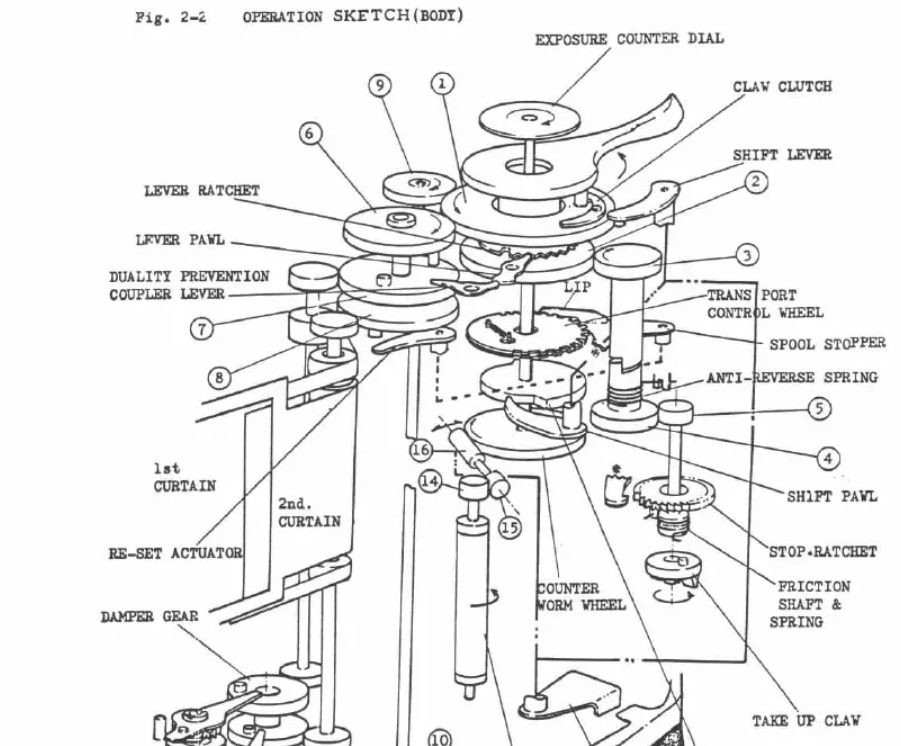
That question opens up a fascinating comparison between three of the most iconic medium format SLR platforms ever produced: the Hasselblad 500 series, the Pentax 6×7 and 67, and the Mamiya RB67. Each represents a distinct engineering philosophy, and those philosophies have very real implications for how long each camera will function reliably — and what happens when something goes wrong.
This article is a detailed look at what is actually happening inside each of these cameras: the shutters, the film transport, the mirror systems, the interlocks, and the modularity (or lack thereof) that determines their repairability and lifespan. If you are trying to decide which system to invest in for the long haul, or if you are already invested and want to understand what you are working with, read on.
The Engineering Philosophies Behind Each System
Before diving into components, it helps to understand the fundamental design philosophy each manufacturer was working from.
Hasselblad, working from a Swedish engineering tradition and originally producing cameras for aerial reconnaissance, built the 500 series around modularity and serviceability from the outset. The camera was designed to be broken down into discrete, independently functioning modules — body, film magazine, and lens — each of which could be serviced, replaced, or upgraded independently. This is not an accident of design; it is the central organizing principle of the entire 500 system.
Pentax, by contrast, approached the 6×7 format with an ambition to create what was sometimes marketed as the ‘ideal format’ — the largest single-frame camera that could still be comfortably hand-held and operated like a large 35mm SLR. The result was essentially a scaled-up 35mm camera design, bringing with it the complexity of the focal plane shutter and integrated film transport that define that format. The 6×7 is a tour de force of mechanical miniaturization at scale.
The Mamiya RB67 occupies its own territory. Designed as a studio workhorse, it was built around the bellows-focus system and rotating back as its defining features, with leaf shutters housed in each lens. Like the Hasselblad, it is modular — film backs are interchangeable mid-roll — but its mechanical systems are substantially more complex than the Hasselblad’s, and the sheer physical scale of the camera means that tolerances are large and components are robust.
The Hasselblad 500 Series: Elegant Simplicity
The Shutter System
The most important mechanical decision Hasselblad made in the 500 series was to house the shutter inside each lens rather than in the camera body. Every 500 series lens — from the early C lenses through the CF, CFE, and CB variants — contains a Compur or Prontor leaf shutter, a self-contained mechanism using a series of thin overlapping metal blades that open and close from the center outward. The camera body itself contains no shutter.
This is a profound simplification. A leaf shutter has fewer moving parts than a focal plane shutter, operates at lower mechanical stress (the blades move only a few millimeters), and is relatively easy to service. Speeds from 1 second to 1/500th can be set independently on the lens, and flash sync is available at every speed — a practical advantage that also reflects the mechanical simplicity of the design.
The tradeoff is that each lens requires its own shutter, meaning that shutter servicing costs are incurred per lens rather than per body. But the individual shutters are small, well-understood mechanisms that any competent camera technician can service, and replacement parts remain available.
The Film Transport and Cocking Mechanism
When you wind the film advance knob (or crank, depending on the model) on a Hasselblad 500C/M or 501/503 body, several things happen simultaneously: the mirror is lowered and locked into position, the shutter in the mounted lens is cocked, and the film is advanced one frame in the attached magazine. This is accomplished through a series of cams and levers that are elegant in their directness.
The winding mechanism drives a main shaft through the body, which actuates the mirror mechanism and, through a coupling at the lens mount, cocks the lens shutter. The film magazine has its own internal transport mechanism that advances film independently, synchronized through a coupling pin when attached to the body. The dark slide interlock — which prevents the shutter from firing if the dark slide is inserted — is a simple mechanical flag system.
What is notable is the low part count involved in each of these operations. There are no complex planetary gear trains, no multi-stage reduction gears, no spring-loaded detents managing film frame spacing through a sequence of intermediate levers. The winding is direct, the coupling is robust, and the critical components are accessible.
The Mirror System
The 500 series uses a fixed mirror that flips up for exposure and returns under its own spring tension — a design sometimes called a ‘return mirror’ system. In the 500C/M and later bodies, the mirror return is controlled by a spring and damped by a simple foam bumper (which, yes, eventually deteriorates and requires replacement — but this is a $10 fix). The mirror itself is a straightforward single-surface front-silvered glass mirror, large enough for the 6×6 frame.
The mirror box is a machined aluminum casting. There are no complex linkages connecting mirror position to film transport status; the mirror simply rises when the shutter is tripped and returns when the winding cycle is complete. The interlock that prevents double exposure — the mechanism that ensures the shutter cannot fire until the film has been advanced — is a simple mechanical block on the winding shaft.
Modularity and the Long View
Perhaps the greatest mechanical advantage of the Hasselblad 500 system is its modularity. When a film magazine’s transport fails, you replace or service the magazine without touching the body or the lens. When a lens shutter needs cleaning, you have the lens serviced without sending the body. When the body’s mirror damping foam fails, a technician can access it without disassembling the shutter system.
This modularity also means that the accumulation of wear is distributed across components rather than concentrated in a single integrated mechanism. A 500C/M body that has transported 5,000 rolls of film has worn its body mechanism through 5,000 cycles; but those cycles involved only the cocking mechanism and mirror — the shutter wear is tracked per lens, not per body.
A Hasselblad 500 series body, at its core, is a mirror box, a lens coupling, and a magazine interface. In mechanical terms, this is as simple as a medium format SLR can be.
The Pentax 6×7 and 67: Magnificent Complexity
The Focal Plane Shutter
The Pentax 6×7 uses a horizontally traveling cloth focal plane shutter — functionally identical in concept to the shutter found in a 35mm Pentax Spotmatic or K1000, but scaled up dramatically to cover a 56 x 70mm frame. This scaling is where the engineering challenge begins.
A focal plane shutter works by running two curtains across the film plane at high speed, with the gap between them determining the effective exposure time at fast speeds. At slow speeds, the first curtain fully opens, the exposure time is counted by an escapement mechanism, and the second curtain closes. The shutter tensioning, the curtain travel, the timing escapement, and the film transport are all mechanically linked in the camera body.
For a 35mm camera, this mechanism covers a film gate of approximately 24 x 36mm. For the Pentax 6×7, it must cover a gate nearly four times larger. The shutter curtains are heavier, the springs must be stronger, the timing tolerances are harder to maintain across the wider travel distance, and the wear per cycle is substantially greater. The 6×7’s shutter is rated to a maximum speed of 1/1000th — respectable — but achieving accurate timing across that large a frame consistently, for decades, requires regular attention.
The curtain material in early 6×7 bodies is cloth, which can become brittle with age and develop pinholes or wrinkles that cause uneven exposure. Later 67 bodies (post-1989) used improved materials, but the fundamental scaling challenge remains.
The Film Advance: Where It Gets Complicated
Here is where the Pentax 6×7/67 diverges sharply from the Hasselblad in terms of mechanical complexity, and where your failed film advance lever originates.
Advancing film in a medium format camera requires more than simply moving the film: it must be moved the correct distance for the frame size, the shutter must be re-cocked, the mirror must be reset, the frame counter must advance, and the double-exposure prevention mechanism must reset. In a 35mm camera, these operations are handled by a relatively compact gear train. In the Pentax 6×7, the same operations must be performed at roughly double the scale, across a larger frame spacing, against the greater resistance of wider film and larger springs.
The advance lever mechanism in the 6×7 is a multi-stage gear reduction system. The lever drives a series of intermeshing gears that step down the motion into the precise advancement required for 70mm frame spacing on 120 film, while simultaneously cocking the shutter and resetting the mirror mechanism. This gear train includes several small-diameter gears that experience significant mechanical stress at the reduction points.
The specific failure mode I encountered — the advance lever stopping mid-stroke or failing to complete the cocking cycle — typically involves wear or fracture at one of these gear reduction stages, or failure of a spring-loaded detent that manages the sequential engagement of the cocking and film advance functions. When a reputable technician opens a 6×7 with this failure, they often find fine metal particles from worn gear teeth distributed throughout the gear train, indicating that the failure has been developing gradually over many cycles.
This is not a design defect per se — it is a consequence of applying a 35mm design language to a fundamentally larger format. The Pentax engineers who designed the 6×7 were well aware of these tradeoffs; the camera launched in 1969 was, by any measure, an extraordinary engineering achievement. But extraordinary complexity has a cost.
The Mirror: Size and Consequence
The Pentax 6×7’s mirror is large — necessarily so for a 6×7 frame with an SLR viewing system. Mirror slap in this camera is legendary among photographers who have used it, and it is not merely a vibration issue: the mirror’s size means that the spring mechanism that drives it upward and the damping system that absorbs its return must handle substantial inertia.
The mirror assembly in the 6×7 is linked to the advance mechanism such that mirror return is part of the winding cycle. If the advance is incomplete, the mirror may be left in the raised position — a condition that leaves the viewfinder blacked out and requires manually cycling the mechanism to resolve. The mirror damping foam, like the Hasselblad’s, deteriorates over time, but access to the mirror box for replacement requires more disassembly in the Pentax.
The 67 Improvements
Pentax’s 67 (1989) and 67II (1998) iterations improved on the original 6×7 in meaningful ways. The 67 introduced a more reliable film transport mechanism with improved materials at the gear reduction stages, a more robust advance lever coupling, and better sealing against dust. The 67II added spot metering and multi-exposure capability but did not fundamentally redesign the core mechanical architecture.
Experienced technicians who work on both generations generally report that 67-era bodies are somewhat more durable in the advance mechanism, but that all three versions of the camera benefit substantially from regular CLAs, and that all are vulnerable to the same category of advance mechanism failures under heavy use.
The Pentax 6×7 is a mechanical masterpiece — but it is a masterpiece of complexity, and complexity, under the physics of wear, is a liability over decades of use.
The Mamiya RB67: A Different Kind of Complexity
The Bellows Focus System
The Mamiya RB67 — ‘RB’ standing for Rotating Back — achieves focus not through helical focusing in the lens (as the Hasselblad and Pentax do) but through a bellows system that extends and retracts the entire lens board on the camera body. This is mechanically simple in principle: a rack-and-pinion gear drives the bellows extension, and focus is adjusted by turning a large, well-damped knob.
The advantage is that lens elements remain in a fixed optical relationship to each other regardless of focus distance — the entire lens unit simply moves closer to or farther from the film plane. This is beneficial for macro work and produces excellent focus accuracy across the full focus range. The bellows themselves are rubber-coated fabric, and in aging examples they can develop light leaks at the corners, but replacement bellows are available and the installation is straightforward.
The rack-and-pinion gear is robust — it is a large-format design scaled down only modestly — and wear takes many decades to become problematic. This is one of the more reliable mechanisms in the RB67 system.
The Lens Shutters
Like the Hasselblad, the Mamiya RB67 houses its shutter in each lens rather than in the camera body. The shutters are Copal leaf shutters, mechanically very similar to the Compur shutters in Hasselblad lenses, covering speeds from 1 second to 1/400th with full flash sync at all speeds. The per-lens shutter approach means the body is mechanically simpler than the Pentax in the shutter department, and the same distributed-wear advantages apply.
One complication: the RB67 shutter must be cocked via a lever on the lens, which is linked to the body’s film advance system through a coupling mechanism. The cocking linkage, particularly on earlier Pro and Pro-S bodies, can become stiff or fail to fully engage after many cycles. This is a known maintenance item and is addressed in routine CLA service.
The Film Transport and Rotating Back
The film back on the RB67 is a self-contained unit with its own film transport mechanism, dark slide interlock, and frame spacing system. Advancing the body advance knob (or lever, depending on configuration) cocks the shutter and signals the back that a new exposure is ready; advancing the separate back wind lever actually moves the film. This two-step process is distinctive to the RB system and is occasionally a source of confusion for new users, but it is mechanically sensible: the body and back functions are cleanly separated.
The rotating back mechanism — the feature that allows the back to be rotated 90 degrees between portrait and landscape orientation without repositioning the camera or tripod — involves a precision detent ring and bayonet-style locking mechanism. This rotating interface is subjected to repeated stress and, in heavily used examples, can develop looseness that affects the seal between back and body. It is, however, a repairable and replaceable component.
The two-motion advance (body cock, then back advance) means that the two most stressed mechanisms in the system are physically separated, which is an advantage from a serviceability standpoint. A failed film back can be swapped in the field; a body with a failed cocking mechanism can be sent for service while film transport continues using a different body.
Overall Mechanical Complexity: RB67 vs. the Others
The RB67 is a large, heavy camera, and its mechanisms are correspondingly large and robust. The tolerances are not tight in the watchmaker sense that a Hasselblad demands — the RB67 is more of a precision industrial instrument, engineered for reliability over many cycles at a scale that favors durability. The individual mechanisms are not simple, but they are well-made and, critically, designed to be serviced.
Where the RB67 accumulates complexity relative to the Hasselblad is in the lens cocking linkage, the rotating back interface, and the somewhat intricate interlock logic that prevents double exposure across the body-back interface. These are not inherently fragile — they are just more things that can eventually need attention.
Head-to-Head: Complexity, Repairability, and Longevity
| Factor | Hasselblad 500 | Pentax 6×7/67 | Mamiya RB67 |
| Shutter location | In each lens | In body (focal plane) | In each lens |
| Shutter type | Leaf (Compur/Prontor) | Cloth focal plane | Leaf (Copal) |
| Film transport complexity | Low | High | Moderate |
| Modularity | Very high | Low (integrated) | High |
| Mirror system | Simple return spring | Complex, large inertia | Moderate complexity |
| CLA interval | Every 3-5 years | Every 2-3 years | Every 3-5 years |
| Typical failure modes | Mirror foam, shutter blades | Advance gears, shutter curtains | Bellows, cocking linkage |
| Repairability | Excellent | Moderate (specialized) | Good |
| Parts availability | Good | Moderate | Moderate-Good |
| Longevity potential | Highest | Moderate | High |
The Hasselblad Advantage
In any honest assessment, the Hasselblad 500 series comes out ahead on longevity. This is not merely a function of build quality — though Hasselblad’s manufacturing tolerances are exceptional — but of fundamental mechanical architecture. Fewer parts means fewer things to wear. Modular design means that when something does wear, the scope of repair is contained. Lens-based leaf shutters distribute wear across multiple independent mechanisms rather than concentrating it in a single body-mounted system.
There are Hasselblad 500C bodies manufactured in the early 1960s that are still in regular use today, producing excellent images. This is not coincidental. These cameras were designed in a tradition of professional instrumentation — aviation cameras, scientific cameras — where longevity and repairability were design requirements, not afterthoughts.
The most common service items on a 500 series body are the mirror damping foam (a degradation issue, not a wear issue), light seals in the magazine, and periodic shutter service on individual lenses. None of these are catastrophic failures, and all are well within the capability of most trained camera technicians.
The Pentax Reality
This is not to say that the Pentax 6×7 and 67 are unreliable cameras. Tens of thousands of them have been used professionally for decades, producing some of the most celebrated medium format imagery of the 20th century. But they require more attention, and the consequences of deferred maintenance are more severe.
The film advance mechanism is the Achilles’ heel. Under heavy professional use — multiple rolls per day, year after year — the gear train in the advance mechanism accumulates wear at a rate that the Hasselblad system simply does not match, because the Hasselblad does not concentrate that mechanical load in a single integrated gear train. The Pentax advance mechanism, when it fails, often requires sourcing replacement gears that are no longer manufactured, or having them machined from stock by a specialist. This is possible, but it is expensive and requires a technician with specific experience on this platform.
The focal plane shutter is the other long-term concern. Shutter curtain replacement for a 6×7-format cloth shutter is a significant procedure, and the springs and escapement mechanism require careful calibration across the full width of travel. It is serviceable — but less straightforwardly than a leaf shutter.
The Mamiya in Practice
The RB67 occupies a reasonable middle ground. Its leaf shutters share the Hasselblad’s advantages in that department, and its modular back system means that back-related issues do not take the whole camera out of service. The bellows is a wear item, but a predictable and replaceable one.
Where the RB67 loses points relative to the Hasselblad is in its overall system complexity — more mechanisms, more potential failure points — and in the difficulty of service on some components. The rotating back interface and the lens cocking linkage both require experienced hands, and the camera’s sheer size and weight mean that it sees less casual use, which paradoxically means it may sit longer between CLAs than a more frequently used camera.
For studio use — where the camera is carefully maintained, used in controlled conditions, and serviced regularly — the RB67 is an excellent long-term investment. For travel or heavy field use, the Hasselblad’s combination of smaller size and simpler mechanics gives it an edge.
The CLA Question: How Often and Why It Matters
Every mechanical camera requires periodic cleaning, lubrication, and adjustment — a CLA. But the interval, cost, and consequence of deferred service varies significantly between these systems.
On a Hasselblad 500 series, a CLA from a competent technician typically covers the body mechanism (mirror, winding, interlocks), the lens shutter (cleaning blades, lubricating speed mechanism), and the film magazine (transport, dark slide, light seals). Expect to pay separately for body and per lens, with total costs depending on how many lenses are in the system. The good news is that the work is well-defined, the parts are standardized, and many independent technicians are trained to work on these cameras.
On a Pentax 6×7/67, the CLA scope is larger in a single procedure because everything is integrated. The shutter, advance mechanism, mirror, and all associated interlocks are serviced together, which means a skilled technician can address the whole system in one visit. The concern is finding that technician: the 6×7/67 advance mechanism requires someone who has opened enough of them to understand the failure modes and the correct assembly sequence. There are excellent specialists in the United States and Japan, but the pool is smaller than for the Hasselblad.
My Pentax 6×7 is currently in the process of being serviced. Check out my article on the Pentax 6×7 film winder issue for where to get yours serviced.
On the Mamiya RB67, CLA is somewhat more straightforward than the Pentax because of the modular architecture — body and backs can be serviced independently — but the overall complexity still demands an experienced technician. RB67 bodies are generally less expensive to purchase than equivalent Hasselblad bodies, which has created a somewhat unfortunate pattern where marginal examples end up with owners who defer service indefinitely.
A well-maintained Hasselblad 500CM from 1970 and a well-maintained Pentax 67 from 1995 are both excellent cameras. The word ‘maintained’ is doing a lot of work in that sentence.
Verdict: Which System Has the Best Long-Term Prospects?
If longevity is your primary criterion, the Hasselblad 500 series is the clear answer. Its mechanical simplicity, modular architecture, excellent parts support, and the large global community of trained technicians give it the best odds of being functional fifty years from now. The cameras already have a sixty-year track record to reference, and the evidence is unambiguous.
The Mamiya RB67 is a strong second choice, particularly for photographers who plan to use it primarily in studio settings where careful maintenance is practical and the rotating back’s orientation flexibility is genuinely useful. It is more complex than the Hasselblad but shares the leaf shutter advantage and is a solidly engineered instrument.
The Pentax 6×7 and 67 are extraordinary cameras that produce exceptional image quality from exceptional lenses — the Pentax 6×7 lens lineup is arguably the finest ever produced for any medium format system — but they demand more diligent maintenance and carry higher long-term service risk, particularly around the film advance mechanism and focal plane shutter. If you already own one, find a technician who specializes in this platform and establish a regular CLA schedule. If you are considering purchasing one, factor service costs into your budget from the outset.
The good news for all three systems is that the resurgence of interest in medium format film photography has brought a new generation of technicians into the field, and parts support — while not infinite — remains better than it was a decade ago. All three cameras, maintained properly, are capable of producing extraordinary work for decades to come.
The Hasselblad, however, remains the benchmark for how a precision mechanical instrument should be designed if the goal is a century of service. That is not an accident. It is architecture.
Purchasing gear from the above link helps me keep the site going!