Search Fujifilm GFX Cameras at KEH.com

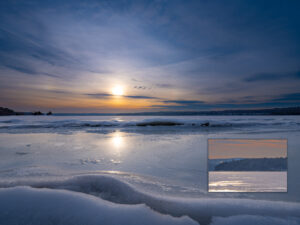
The above shot was taken with the Fujifilm GFX 100s. The lake was entirely frozen, even waves froze before they could crash. Looking at the cropped overlay I added, you really get a sense of the amount of detail you get from 102mp.
My wife and I took a trip to Wachusett Mountain. The clouds were beautiful and I was using my GFX 100s as a meter for the Pentax 6×7. The resolution of the GFX 100s is very impressive.
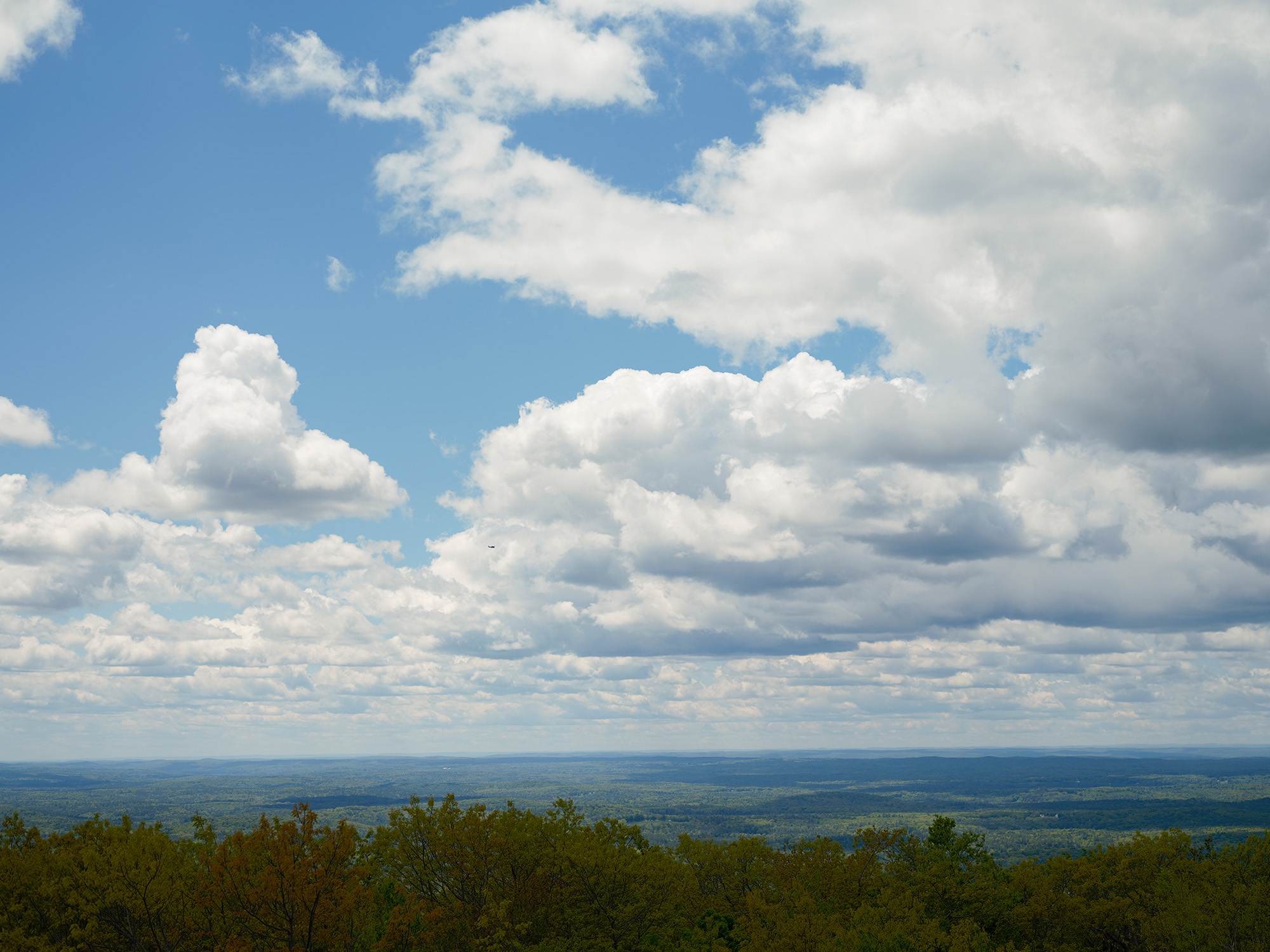
That little spec on the cloud is an airplane. With 102 megapixels you can crop the way no other camera can. Below is a crop of the plane.

Looks like a Cessna 172 to me. This image was shot with the GF 63mm f2.8. This lens is basically Fuji’s medium format version of a “nifty fifty”. The lens is exceptionally sharp.
Why Fujifilm GFX Cameras Out-resolves Full-Frame: It’s Not Just About Megapixels
When photographers first hear that the Fujifilm GFX 100S packs 102 megapixels into its medium format sensor, the natural assumption is that resolution is simply a numbers game. But the GFX 100S’s advantage over most 35mm full-frame cameras goes deeper than pixel count alone—it’s about what those pixels can actually capture.
The Sensor Size Advantage
The GFX 100S uses Fujifilm’s 43.8 x 32.9mm sensor, which is roughly 1.7 times larger than a standard full-frame sensor (36 x 24mm). This isn’t just about cramming more photosites onto silicon. Larger sensors allow for larger individual photosites at any given resolution, and larger photosites gather more light with less noise.
Even if you compared the GFX 100S to a hypothetical 102MP full-frame camera, the medium format sensor would still produce cleaner files with finer tonal gradations. The physics simply favor the bigger sensor.
Resolution That Reveals Detail
At 102 megapixels, the GFX 100S resolves detail that most 35mm cameras simply cannot capture. We’re talking about files where you can crop aggressively and still have enough resolution for large prints. Landscape photographers can capture texture in distant foliage. Portrait photographers see skin detail that requires genuinely skilled retouching rather than the smoothing that lower-resolution files often forgive.
But resolution isn’t just about sharpness—it’s about the information density that gives you flexibility in post-processing.
Dynamic Range: Where Medium Format Shines
This is where the GFX 100S truly separates itself. The larger sensor delivers approximately 14+ stops of usable dynamic range, giving you remarkable latitude to recover shadows and protect highlights.
In practical terms, this means you can expose for highlights in a high-contrast scene and lift shadows in post without the noise, banding, or color shifts that plague smaller sensors pushed to their limits. The tonal rolloff in highlights is smoother and more film-like—transitions that full-frame sensors often clip abruptly, the GFX 100S handles with grace.
For landscape photographers working in dawn or dusk light, or anyone shooting mixed lighting conditions, this expanded dynamic range can mean the difference between a usable image and a compromised one.
The Bottom Line
The GFX 100S doesn’t just offer more megapixels—it offers better megapixels backed by the fundamental physics of a larger imaging area. More resolution, cleaner files at higher ISOs, and a dynamic range that gives you room to breathe in post-processing.
Is it overkill for casual shooting? Perhaps. But for photographers who demand the most from their files, the GFX 100S makes a compelling case that medium format isn’t just about prestige—it’s about capability.
As a wildlife photographer, I would love to shoot wildlife with the GFX system, but that’s the one area when I still reach for my Nikon Z8. Every camera has certain areas where it thrives. For resolution alone, the GFX system wins every time.
The image below was a heavy crop using the GF 250mm f4. With this many megapixels you can turn almost any lens into a macro lens and retain a greater depth of field than you would have with a true macro.

Search Fujifilm GFX Cameras at KEH.com
Purchasing gear from the above link helps me keep the site going!