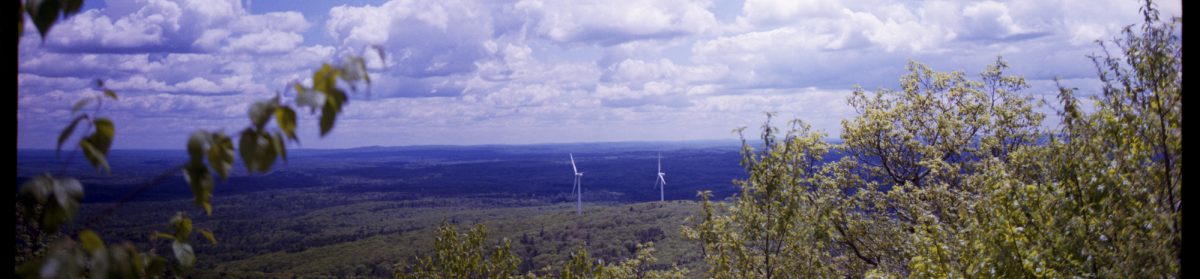
A Wide-Angle Legend That Refuses to Retire
Three optical redesigns, four decades of service, and a second life on digital medium format — the Pentax 67 55mm f/4 might be the most underappreciated wide-angle in the entire 6×7 system.
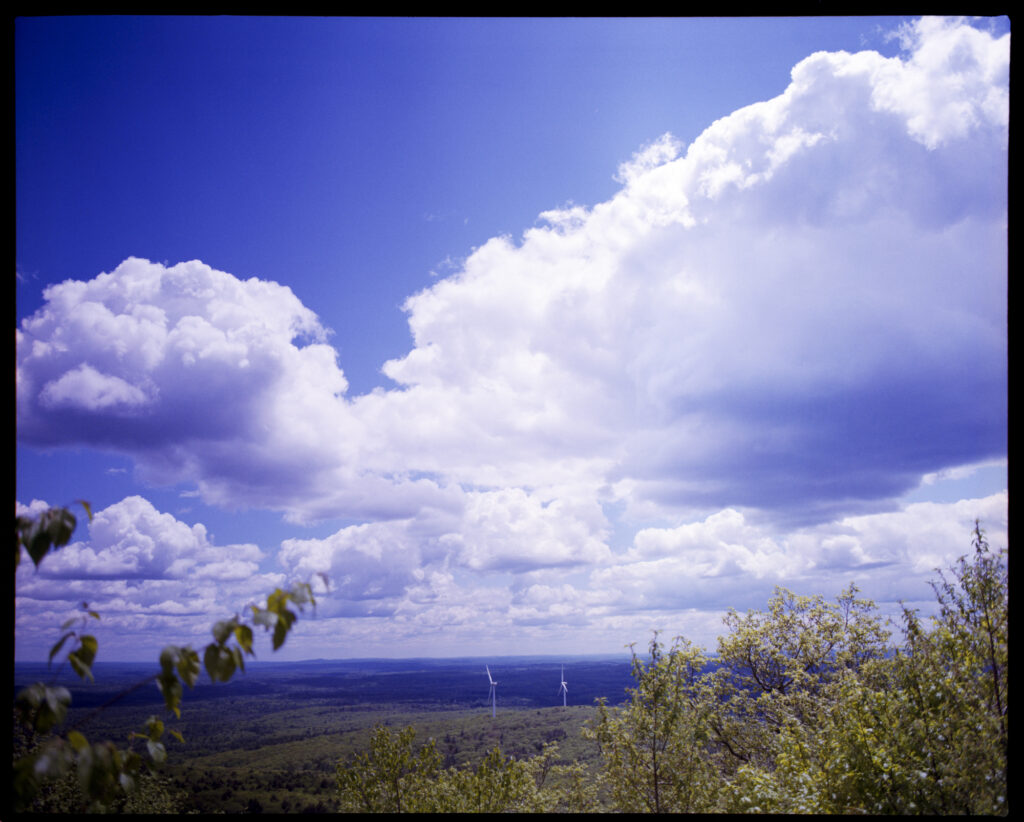
Above image taken with the Pentax SMC 55mm f4 and Kodak Gold 200
A Lens Born From Iteration
The story of the Pentax 67 55mm doesn’t begin with the lens most photographers seek out today. It begins in 1969, with the launch of the original Asahi Pentax 6×7 — a camera that looked and handled like a 35mm SLR on steroids and came backed by an ambitious lens lineup that would eventually rival anything in medium format.
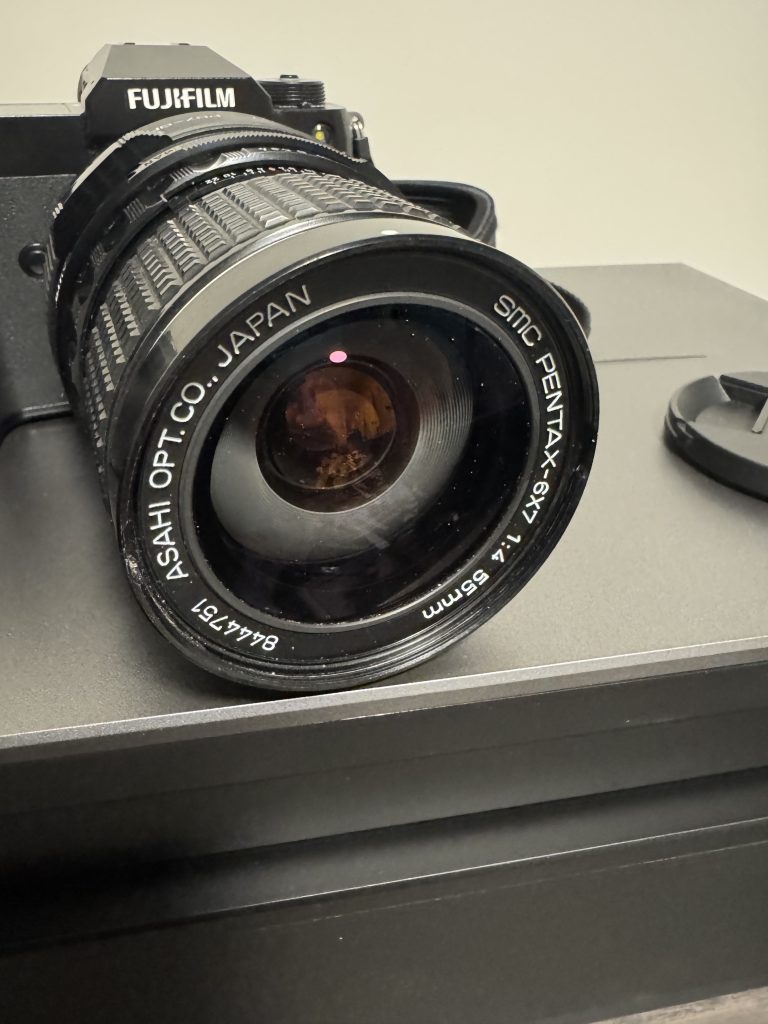
Image above is the Pentax SMC 55mm f4 adapted to the GFX 100s. I also use the lens natively on the Pentax 67.
‘The first 55mm for the system was the Super-Takumar 6×7 55mm f/3.5. It was, by all accounts, a lens that matched the ambition of the camera: massive, heavy, and fitted with a 100mm filter thread that made the already substantial Pentax 6×7 feel genuinely enormous. It delivered the roughly 28mm-equivalent field of view that landscape and architectural photographers needed, but the optical design was a product of its era — good, but with room for improvement, particularly regarding edge performance and flare resistance.
The second generation arrived as the Super-Multi-Coated Takumar 6×7 55mm f/3.5. Externally, it was nearly identical to its predecessor, retaining the same f/3.5 maximum aperture, the same imposing physical presence, and that same 100mm filter thread. The key improvement was in the coatings: Pentax’s Super-Multi-Coating (SMC) technology brought meaningfully better contrast and flare suppression, a change that mattered enormously for a wide-angle lens frequently pointed toward bright skies and light sources. Optically, however, the core design remained the same.
The real transformation came with the third generation: the SMC Pentax 67 55mm f/4, introduced in 1986. This wasn’t a coating update or a cosmetic refresh. Asahi Optical went back to the drawing board and produced an entirely new optical formula — 8 elements in 7 groups — designed with the latest computer-assisted optical technology available at the time. The maximum aperture dropped half a stop to f/4, a deliberate trade-off that allowed the optical engineers to optimize the design for sharpness, contrast, and correction across the entire 6×7 image circle rather than chasing a wider aperture that most photographers shooting landscapes and architecture at this focal length would rarely use anyway.
The physical redesign was equally dramatic. The filter thread shrank from 100mm down to a far more practical 77mm. The lens body adopted the rubber-gripped, modern aesthetic of the late-era SMC Pentax 67 lenses, bringing it in line with contemporaries like the beloved 105mm f/2.4. It was still a large lens — this is 6×7, after all — but it was no longer the unwieldy beast its predecessors had been. At roughly 730 grams and 97mm in diameter, it became something you could actually consider bringing on a hike.
Why It’s a Great Lens
The SMC Pentax 67 55mm f/4 occupies a particular sweet spot that explains why it continues to command respect decades after production ended.
Sharpness that competes with modern glass. Stopped down to f/5.6 or f/8, this lens delivers resolution that can challenge contemporary medium format optics. The 8-element design was Pentax’s most sophisticated wide-angle formula for the 67 system, and the results show — corner-to-corner sharpness across the massive 6×7 negative is exceptional. Multiple photographers who have tested it on digital medium format sensors have described it as performing in the same league as native Fuji GF glass. One experienced reviewer placed it alongside optics like the Leica 180mm f/2.8 APO and the Kowa 350/500mm in terms of resolving power — rarified company for a lens designed in the mid-1980s.
The lens gives a look that I can’t quite replicate with my GFX glass.
A versatile focal length. On the 6×7 format, 55mm delivers a roughly 28mm-equivalent field of view — wide enough to be genuinely useful for landscapes, interiors, and environmental work without the extreme distortion and compositional challenges of an ultra-wide. It’s the classic photojournalistic wide-angle perspective, spacious but still human in its proportions. The lens focuses down to 0.35 meters (some sources list 0.45 meters), close enough that several users have noted it functions surprisingly well as a close-up lens, adding even more versatility to an already flexible focal length.
SMC coatings that still hold up. Pentax’s Super-Multi-Coating was genuinely excellent technology, and the 55mm f/4 benefits from it across all eight elements. Flare resistance is strong for a lens of this vintage, and contrast remains high even when shooting into challenging lighting conditions. Color rendition has that particular Pentax character — warm, rich, with smooth tonal transitions — that so many photographers specifically seek out when choosing adapted vintage glass over clinical modern alternatives.
The build quality of a different era. Metal construction with precise, damped focus action. An aperture ring with positive click stops and usable half-stop detents. The kind of mechanical confidence that makes you trust the tool in your hands. These lenses were built for professional use in the field, and surviving examples remain mechanically sound decades later.
It solved the problems of its predecessors. The jump from the f/3.5 versions to the f/4 represents one of those uncommon cases where a lens family genuinely improved in every meaningful dimension simultaneously. Better optics, better coatings, smaller size, standard filter thread, closer focusing distance. If you’re shopping for a Pentax 67 55mm today, the SMC f/4 is the one to get — the earlier f/3.5 versions with their 100mm filter threads and older optical designs simply can’t compete.
A Second Life on the Fujifilm GFX
Here’s where the story gets interesting for digital shooters. The Fujifilm GFX system, with its 44x33mm sensor and short flange distance, has become the single best digital home for adapted medium format glass. And the Pentax 67 55mm f/4 is one of the lenses that makes the strongest case for adaptation.
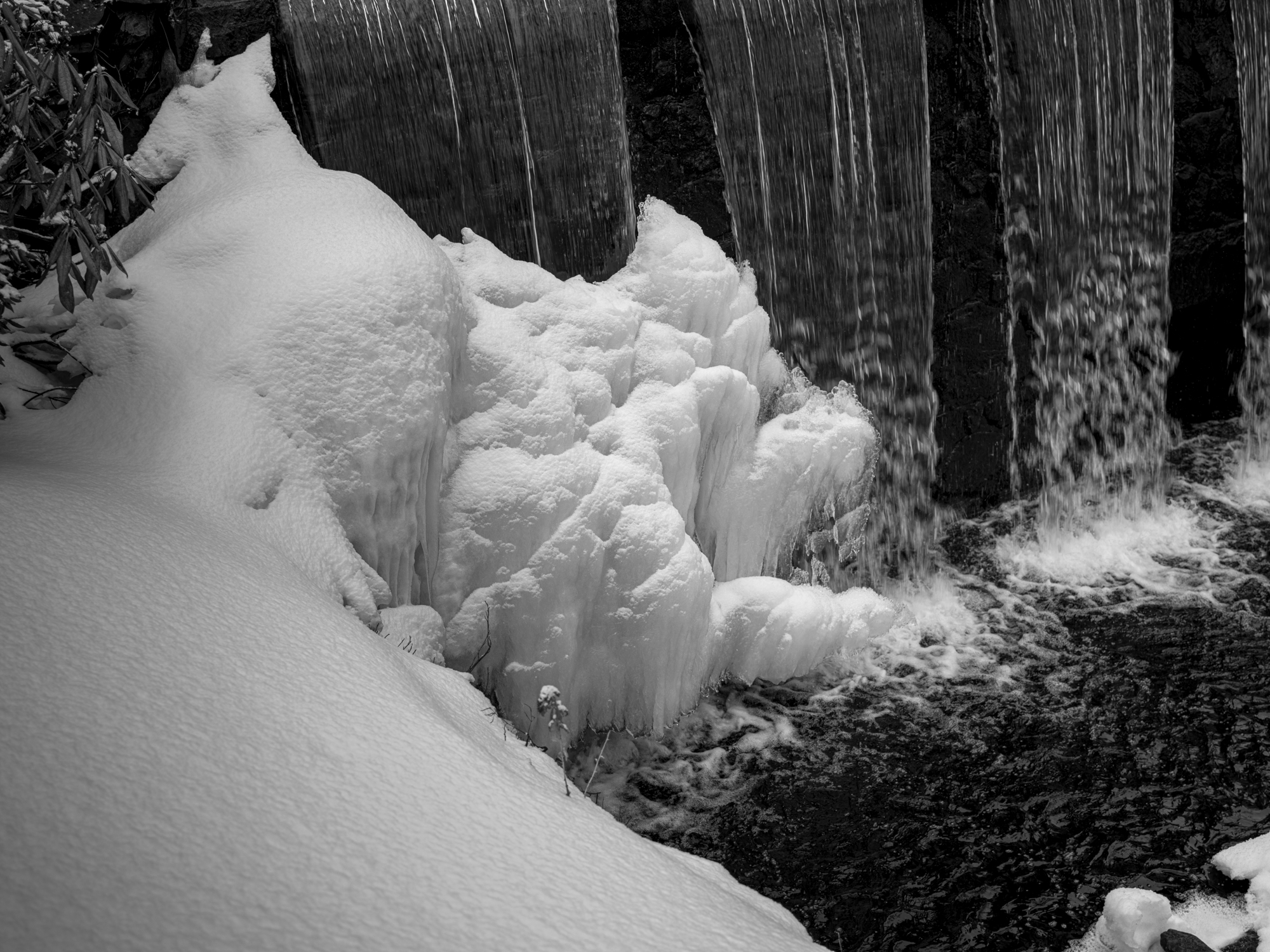
The above image was shot with the GFX 100s and Kipon Adapter.
The Kipon P67-GFX Adapter
Kipon manufactures several adapter options for mounting Pentax 67 lenses to the GFX system, and they’ve become the go-to choice for most photographers exploring this combination.
The standard Kipon P67-GFX adapter is a straightforward, no-optics mechanical adapter machined from aluminum with brass mounting surfaces. It maintains infinity focus, which is critical — without infinity focus, a landscape lens is essentially useless. Build quality is solid, with tight tolerances and none of the play or wobble that plagues cheaper adapters. The lens mounts securely and the adapter locks positively to the GFX body.
Because this is a purely mechanical adapter, all operation is manual: manual focus, manual aperture via the lens’s own aperture ring, no electronic communication with the body. On the GFX, you’ll shoot in aperture priority (stop-down metering) or full manual. This is actually a non-issue with the 55mm f/4, since it was always a manual focus, manual aperture lens to begin with. You lose nothing in the translation.
Kipon also offers more specialized versions for photographers who want additional capabilities. The Kipon Shift P67-GFX adds 15mm of shift movement with 360-degree rotation, turning any Pentax 67 lens into a shift lens — a compelling option for architectural work with the 55mm. The Kipon T&S P67-GFX goes further, adding both 12 degrees of tilt and 15mm of shift along with full rotation, giving you perspective and plane-of-focus control that rivals dedicated tilt-shift lenses at a fraction of the cost. And for photographers who want to restore the original angle of view, the Kipon Baveyes P67-GFX 0.62x focal reducer optically reduces the focal length, effectively making the 55mm behave closer to its 6×7 field of view on the smaller GFX sensor while gaining about a stop and a half of light.
How the 55mm f/4 Performs on GFX
On the GFX’s 44x33mm sensor, the 55mm lens delivers a field of view equivalent to roughly 44mm on full-frame 35mm — a slightly wide normal perspective rather than the 28mm-equivalent wide-angle it provides on the 6×7 format. You’re using only the center of the lens’s massive image circle, which means you’re working exclusively in the area where the optics perform best.

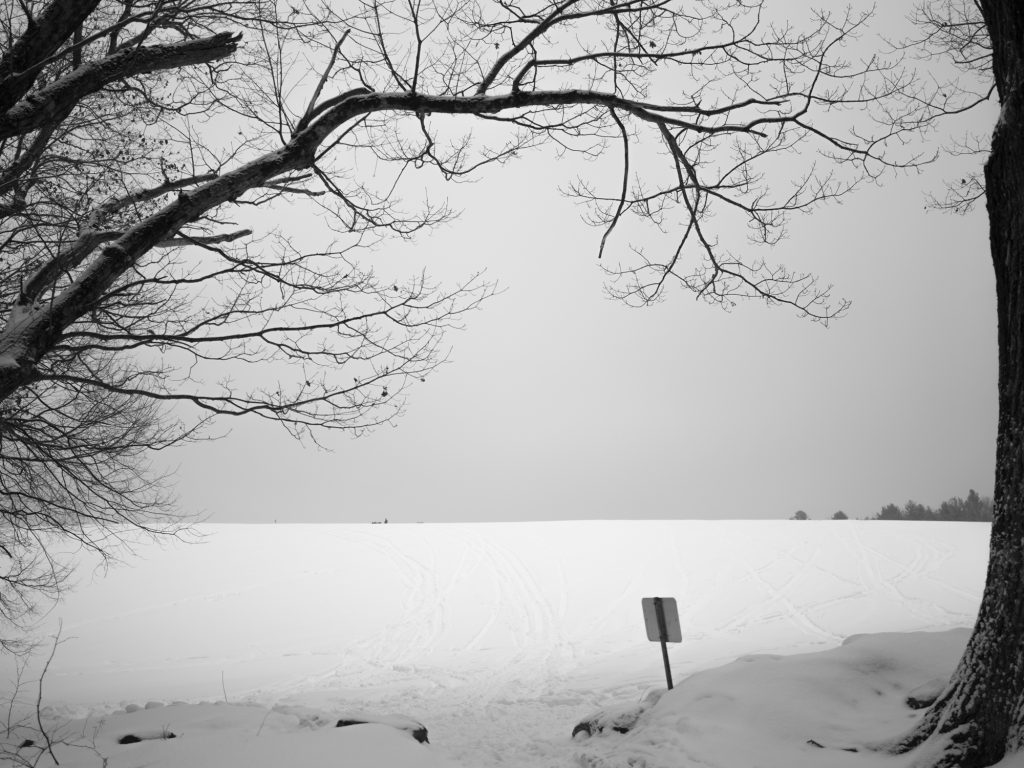
The results are genuinely impressive. Other photographers who have tested the third-generation SMC 55mm f/4 on GFX bodies also consistently describe it as “excellent,” with several noting that it outperforms the Pentax 645 55mm f/2.8 in corner sharpness on the GFX sensor — a notable achievement given that the 645 lens was designed for a smaller image circle that should theoretically be more forgiving. The SMC coatings translate well to digital capture, producing clean, contrasty files with the warm color character that Pentax glass is known for.

The main practical consideration is size. The 55mm f/4 is a big lens, and the adapter adds meaningful length to the package. Mounted on a GFX 50R or GFX 100S, the combination is front-heavy and bulky compared to native GF lenses. It’s not a discreet street shooting setup. But for deliberate, tripod-based landscape and architectural work — the natural habitat for this focal length — the size is a non-issue, and the image quality rewards the effort.
Why Adapt Rather Than Buy Native?
The obvious question: why bother with a 1986 lens and an adapter when Fujifilm makes excellent native glass? A few reasons.
The Pentax 67 55mm f/4 can often be found for well under $500 — sometimes significantly less — while native GF wide-angle options represent a considerably larger investment. For photographers who already own Pentax 67 glass from their film work, the Kipon adapter costs roughly $100–180 depending on the version, opening up an entire lens system for a trivial investment.
There’s also the matter of rendering character. Modern GF lenses are clinically sharp and optically excellent, but they have a particular digital-era rendering that some photographers find sterile. The Pentax 67 55mm f/4 delivers resolution that approaches modern standards while retaining a tonal and color character that is distinctly, pleasantly analog. For photographers who shoot both film and digital medium format, using the same lens across both systems creates a visual continuity in their work that no amount of post-processing can fully replicate.
And if you’re using the tilt-shift adapter, the combination offers camera movements at a price point and with a covering circle that native glass simply can’t match.
The Bottom Line
The SMC Pentax 67 55mm f/4 is one of those lenses that earned its reputation the hard way — through decades of field use by photographers who demanded real-world performance over spec-sheet bragging rights. As the third and final evolution of Pentax’s 6×7 wide-angle, it represents the culmination of nearly two decades of optical refinement, and it remains one of the sharpest and most satisfying wide-angle options in any medium format system.
That it now enjoys a second career adapted to digital medium format bodies is a testament to the quality of the original optical design. Whether you’re shooting landscapes on Portra through a Pentax 67II or capturing architecture on a GFX 100S through a Kipon adapter, this lens delivers. It always has.
If you own a Pentax 67 system and have been eyeing the GFX as a digital complement to your film work, the 55mm f/4 with a Kipon adapter is one of the strongest arguments for making the leap. And if you’re a GFX shooter looking for exceptional adapted glass, the Pentax 67 55mm f/4 belongs on your shortlist.
Sample Images
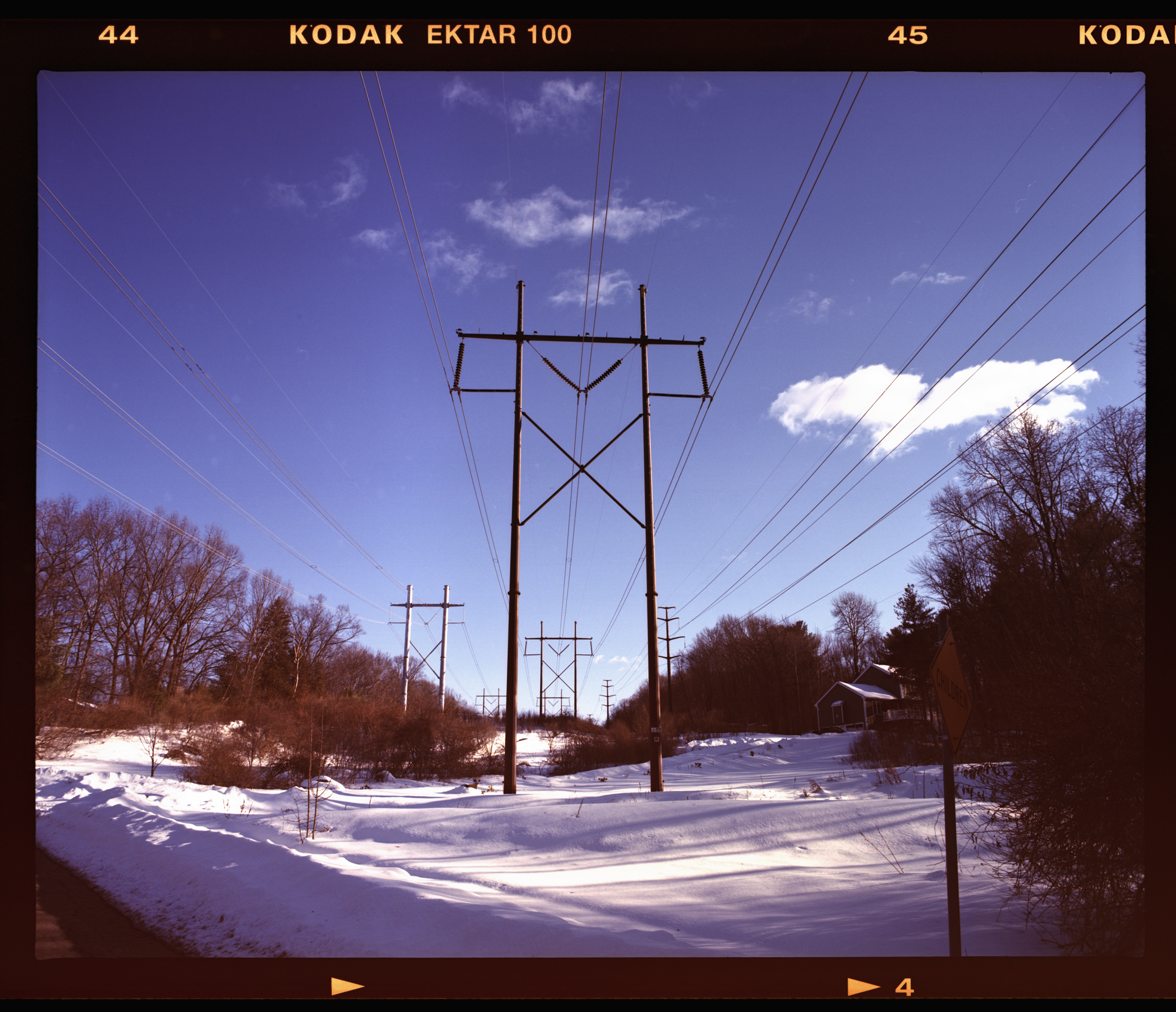
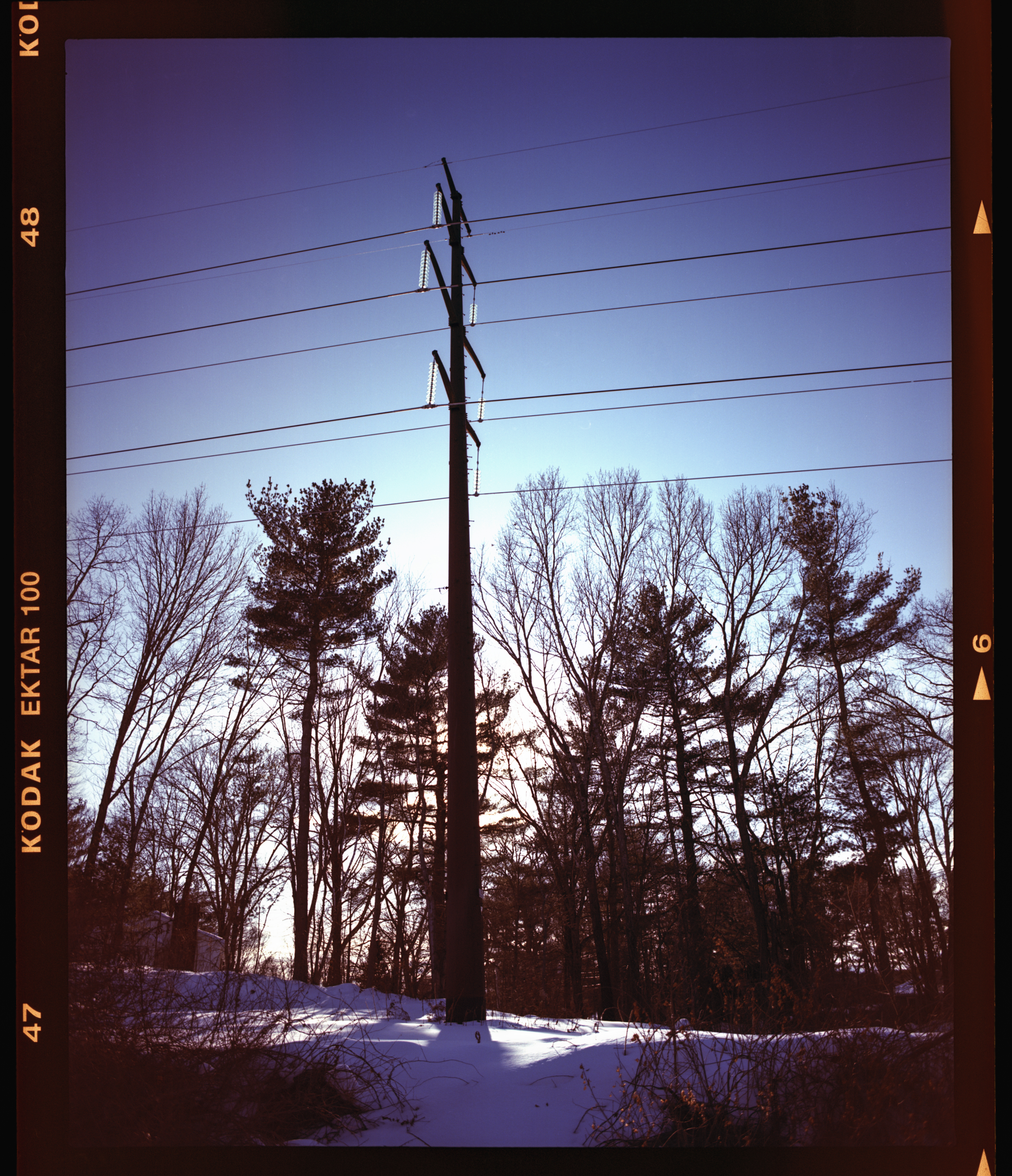

Shooting adapted Pentax 67 glass on the GFX? I’d love to hear about your experiences and see your results.
Purchasing gear from the above link helps me keep the site going!